
December 2025 - Native Plant of the Month: Birch (Betula, spp.)
Classic, Modern, Whimsical and Resilient
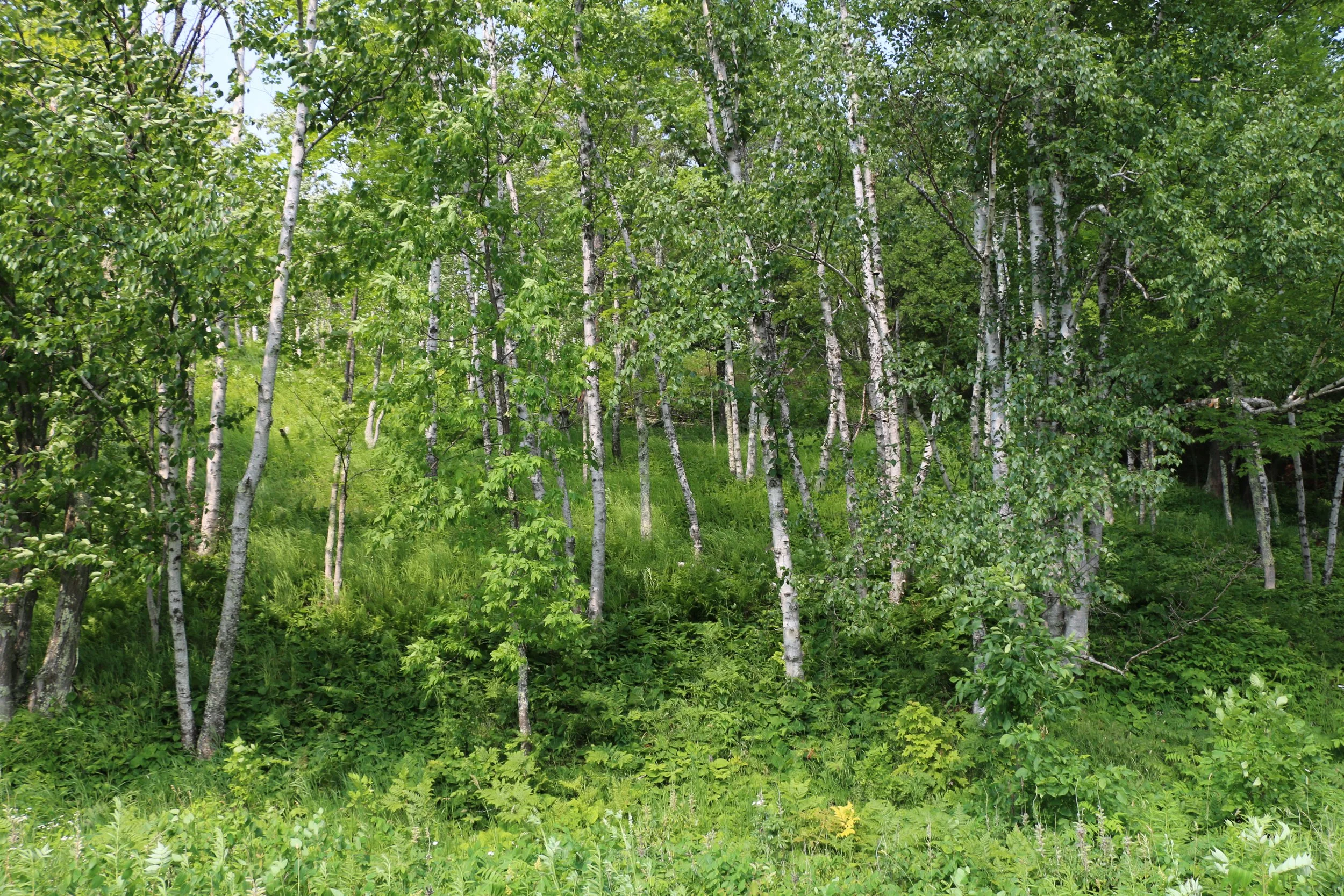
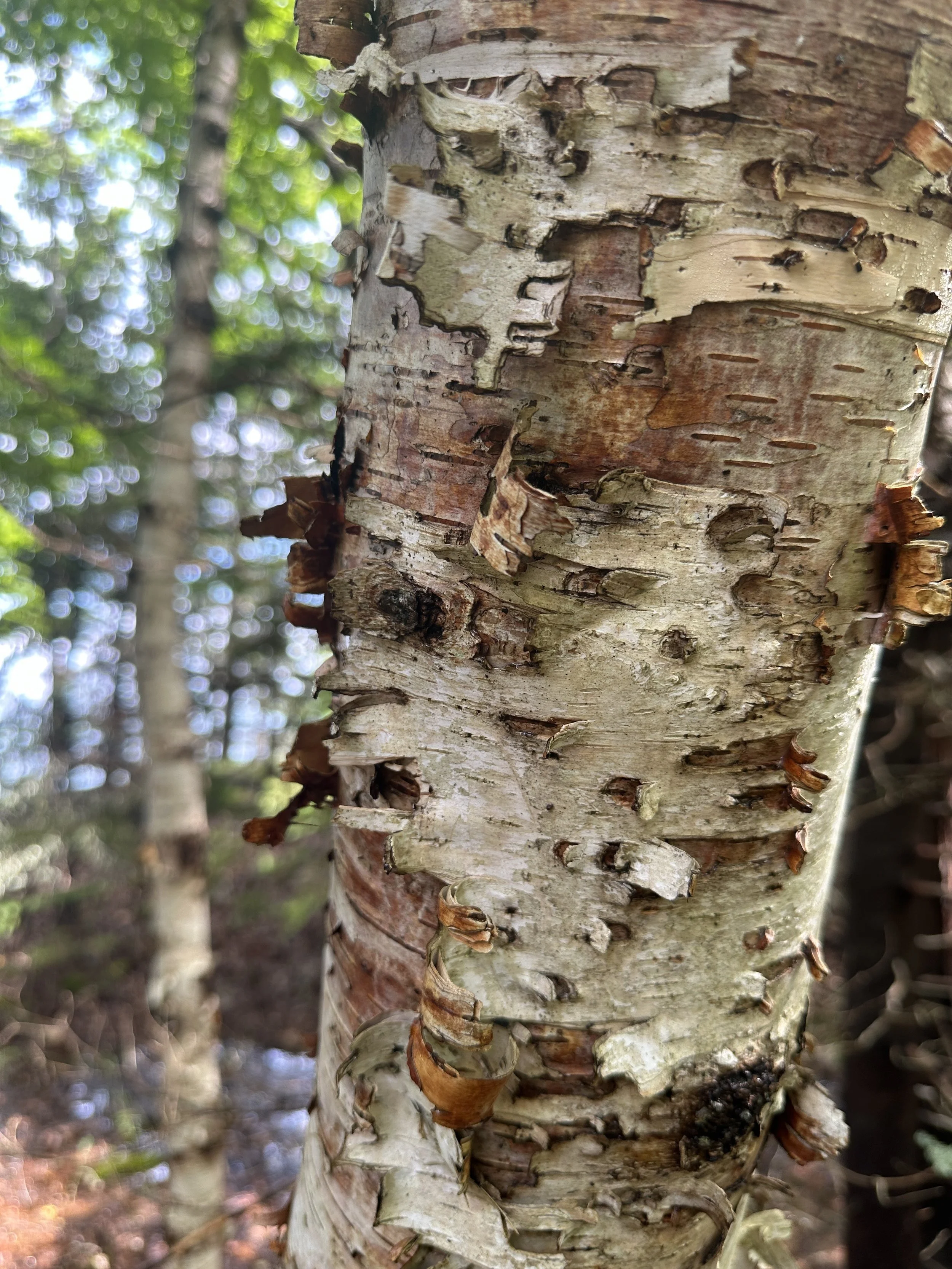
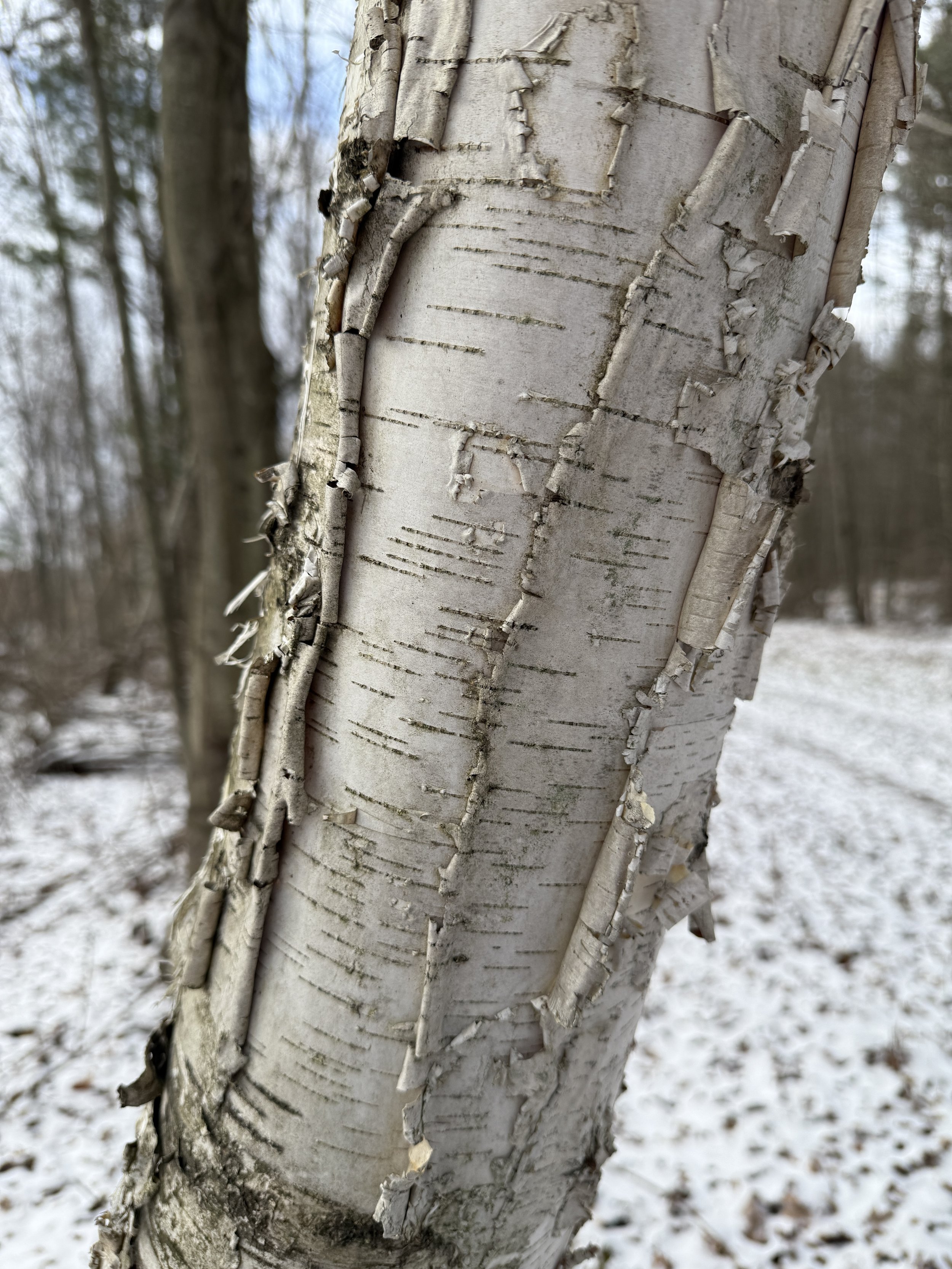
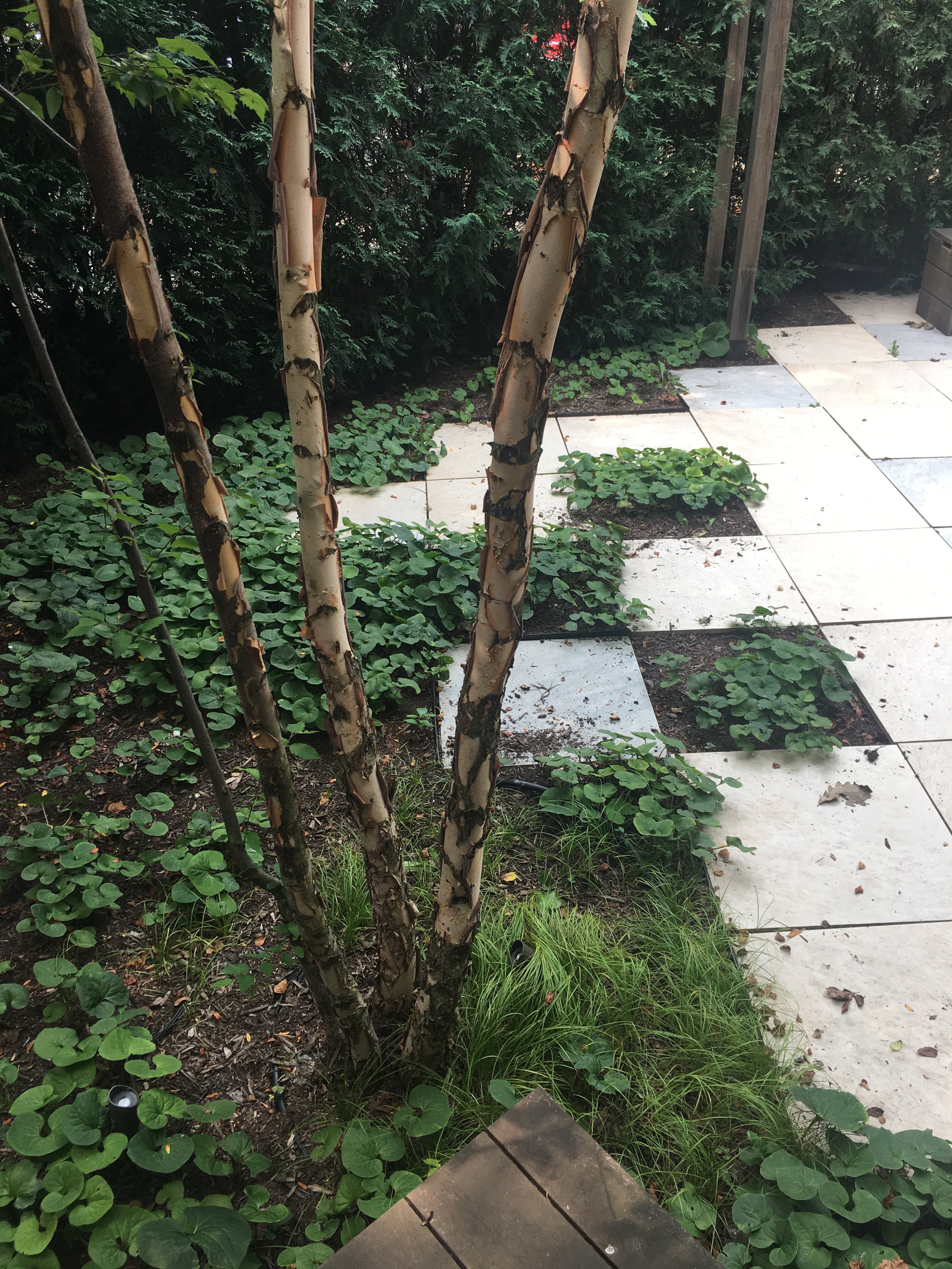
There’s something unmistakable about birch trees… it’s their unique bark! Unlike many trees that are identified by their leaves, birches are best known for their peeling, curling bark, which appears in shades of white, cinnamon, bronze, and soft pink. Some glow bright white with dark striations and “eyes,” while others take on warmer, coppery tones. This distinctive bark makes birch easy to recognize even in the depths of winter, long after the leaves have fallen.
Birches have a long natural and cultural history across the Northern Hemisphere and were among the first trees to recolonize landscapes after glaciers retreated. Today, there are roughly 60 known species worldwide, with about 15 species commonly found across the northern United States, making birch a familiar and enduring presence in our regional landscapes.
A Tree With a Story
Birch has always held a special place in my memory. As a kid, I remember rambling through the woods of central Wisconsin and gaining a quiet confidence as I learned to identify trees on my own—birch being one of the easiest to recognize thanks to its unmistakable, papery bark. I’d peel off little curls and pretend they were maps, or tip over decaying trunks that still stood upright, searching for soft beds of moss, gorgeous lichens, and mushrooms. Birch became synonymous with comfort and discovery—places where I built forts, lingered, and felt at home in the forest.
Even then, birch felt useful, magical, and approachable all at once. Birch groves invited curiosity and made the woods feel like home—easy to navigate, familiar, and quietly protective—becoming my own hidden refuge in the wilderness. For centuries, birch has been valued for both its beauty and its usefulness. Its bark was used for writing, containers, roofing, and canoes, while its catkins and seeds sustained birds and wildlife through long winters. Its sap and wood provided warmth and utility, making birch as practical as it was picturesque. Betula alleghaniensis, or yellow birch, was especially prized for hardwood lumber used in furniture, flooring, tools, veneers, and plywood—a demand that has contributed to its decline in Illinois, where it is now increasingly rare.
Today, birch continues to earn its place in thoughtful landscape design. Its catkins support early pollinators, seeds feed birds well into winter, and its airy canopy brings light and movement to urban spaces. In rooftop and container gardens, species like Betula nigra thrive where other trees struggle, offering texture, seasonal interest, and ecological value. For me, birch is more than a tree—it’s a living link between childhood curiosity, stewardship, and intentional design in the city.

Why River Birch (Betula nigra) Works So Well on Rooftop Decks
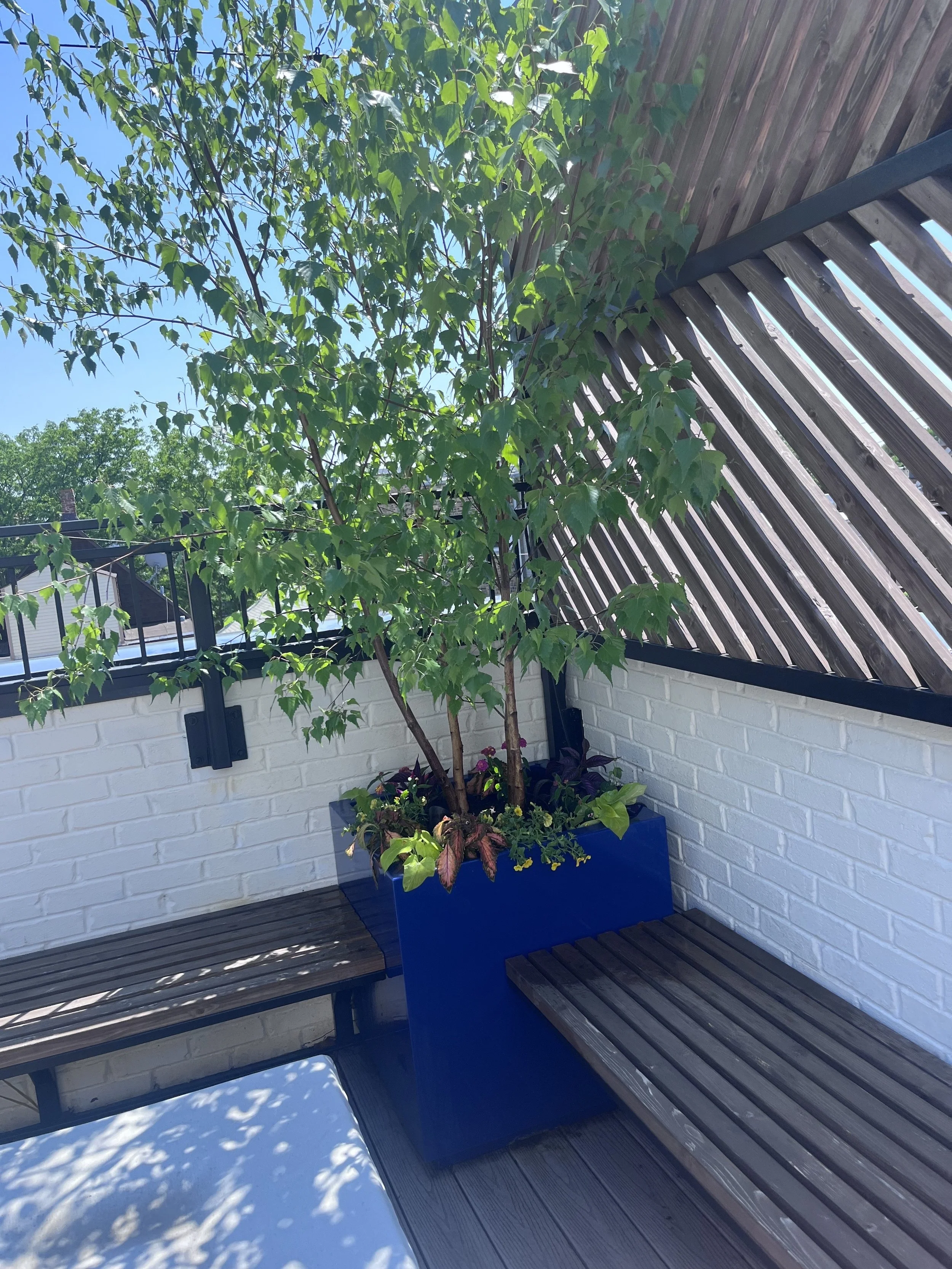
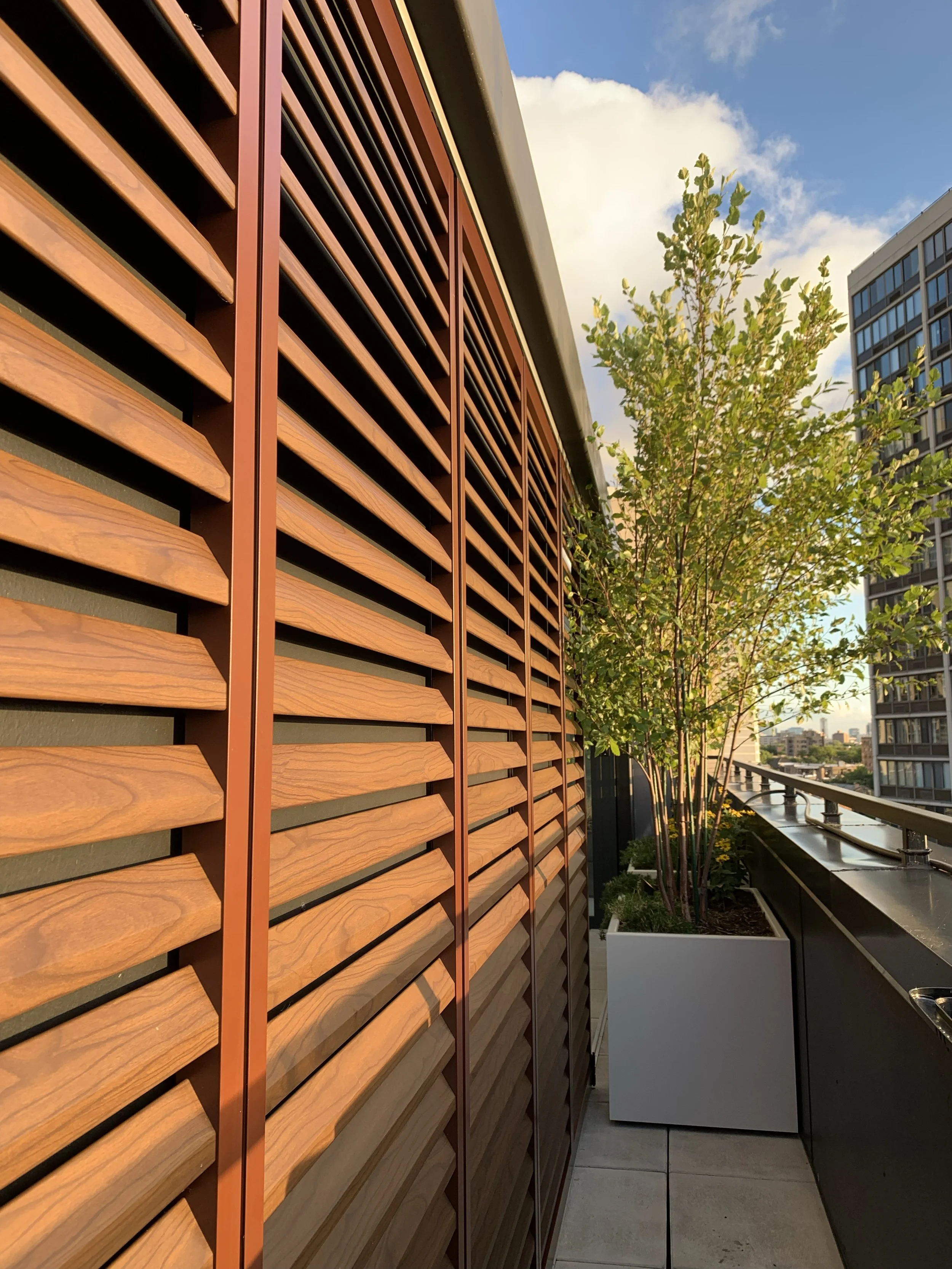
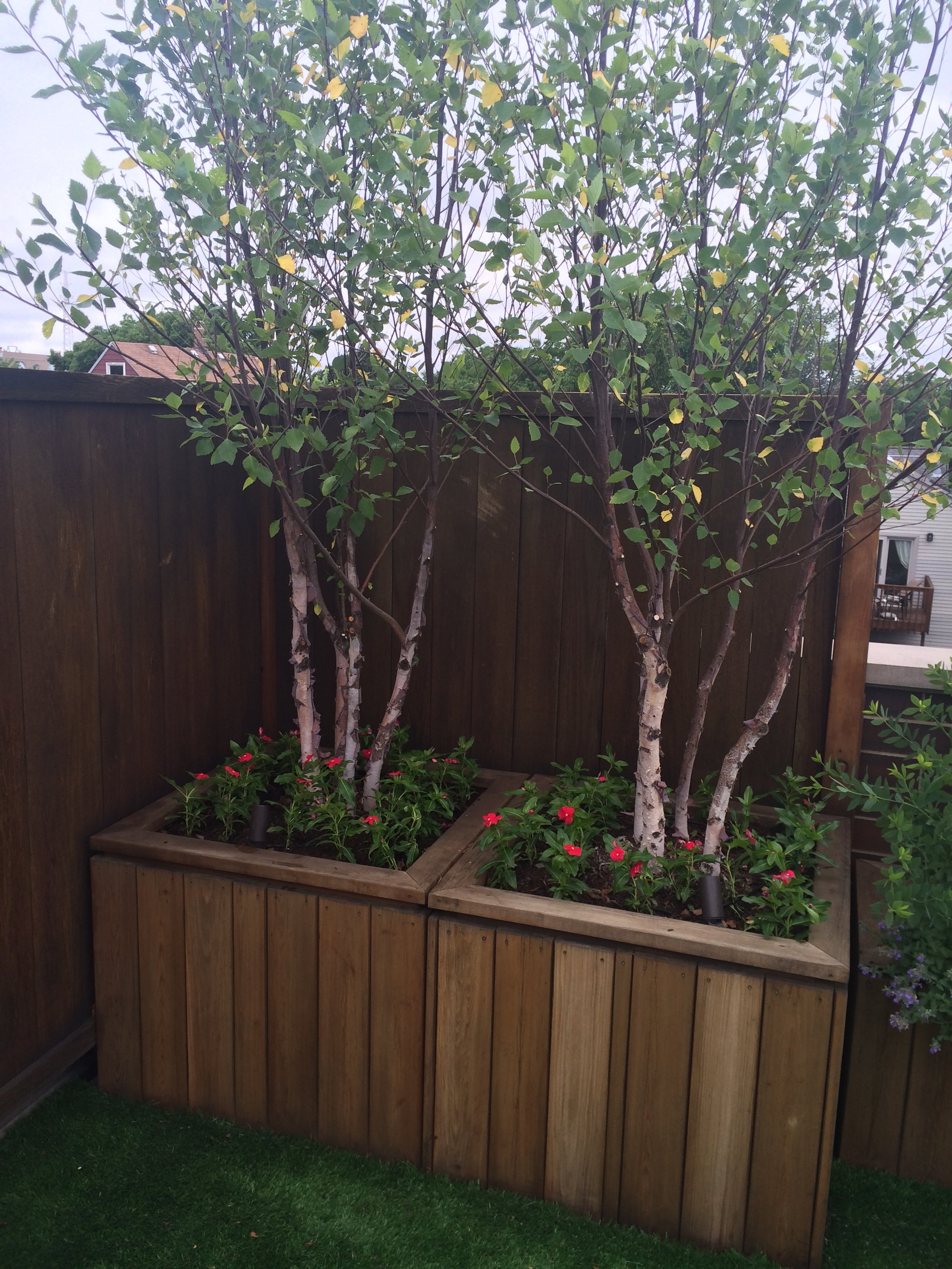
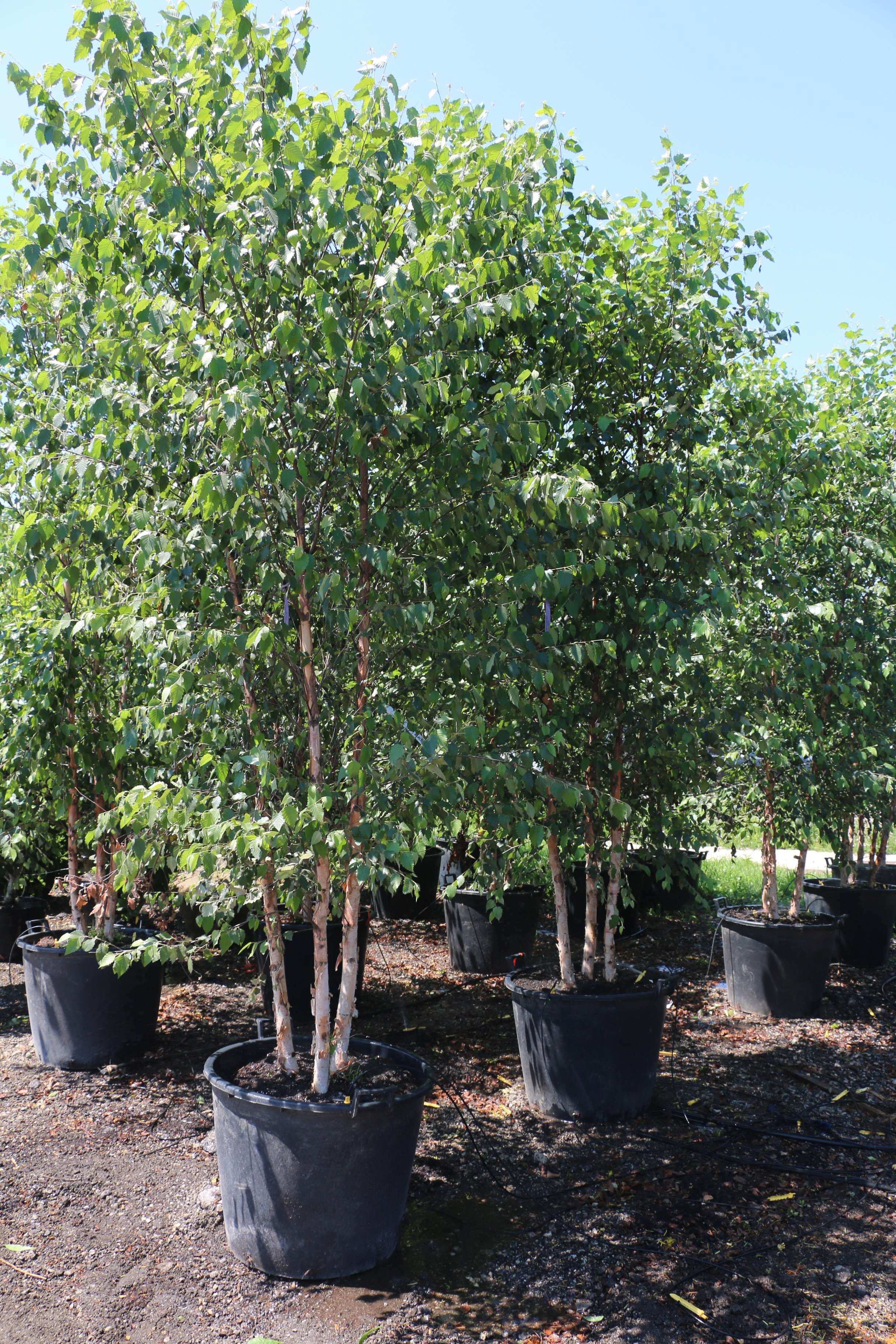
When it comes to rooftop container gardens, not all trees are created equal. We’ve found that Betula nigra stands out as one of the most resilient and adaptable options for rooftop environments, where plants face greater temperature swings, wind exposure, and intense sun. River birch gets its name from being commonly found along riverbanks and streambeds, and in the wild it naturally thrives in swampy, wet conditions.
Naturally hardy in both heat and cold, it performs beautifully in large rooftop containers, as long as it receives a steady supply of water and stays consistently hydrated. Without adequate moisture, this tree can become stressed and more susceptible to pests, but with thoughtful design and reliable irrigation, river birch becomes a graceful, hardworking presence high above the city. Another reason I love it for rooftop spaces? River birch is conveniently available most of the year at local nurseries around Chicagoland, trees are grown in containers, making the work of carrying or hoisting them to the roof a bit less difficult, making it one of the most accessible trees for urban landscapes.
A few reasons birch excels above the street level:
Lightness without heaviness
Its bright, exfoliating bark and airy canopy reflect light and soften hard architectural lines, helping rooftop spaces feel open and balanced without overwhelming the design.Seasonal beauty with purpose
From fresh spring foliage to golden fall color and striking winter bark, birch delivers year-round interest—an especially valuable trait in containers where every plant must earn its place.Strong, fast establishment
River birch establishes quickly in well-designed containers, offering a graceful form that matures efficiently while responding well to proper care and irrigation.
With thoughtful soil volume and pH, proper drainage, and reliable watering, river birch becomes more than a rooftop accent, it’s a hardworking, living element that brings softness, movement, and ecological value to elevated urban spaces.
Caring for Birch
Birches are happiest when their roots stay cool and consistently moist, but there are a few important considerations to keep in mind. They generally do not perform well in parkways or soils with high pH, where they may suffer from iron chlorosis (yellowing leaves), making them less ideal as street trees depending on soil conditions and exposure. A commonly available cultivar, ‘Heritage’, is hardy to zone 4 and easy to transplant, making it a reliable choice for landscapes and large containers.
One of the ways birch shows stress is dramatic leaf-drop—a natural response to insufficient water. While the tree can bounce back, we strongly recommend automated watering systems for all container-grown birches, and increasing water during summer heat spells or droughts to keep them healthy and vibrant.
A few simple tips help birches thrive:
Plant in full sun to Part shade
Keep roots cool and protected with mulch or companion ground covers
Water young trees and containers regularly, adjusting for seasonal heat
Pair with native understory companions that enjoy similar conditions—ferns, wild ginger, and woodland sedges all make excellent neighbors
With proper care, birches can bring year-round beauty, graceful form, and ecological value to both landscapes and rooftop container gardens.
In the Landscape
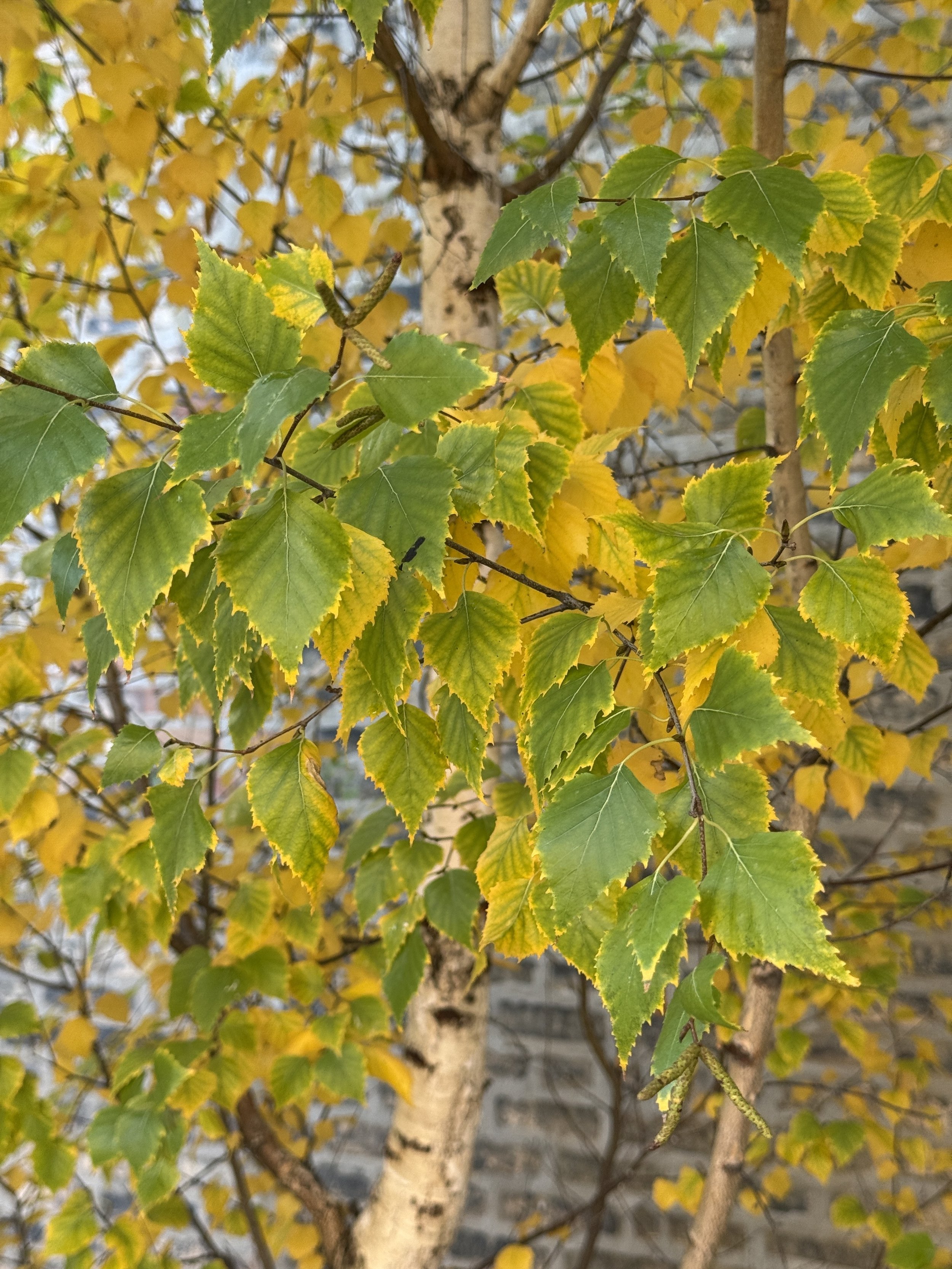
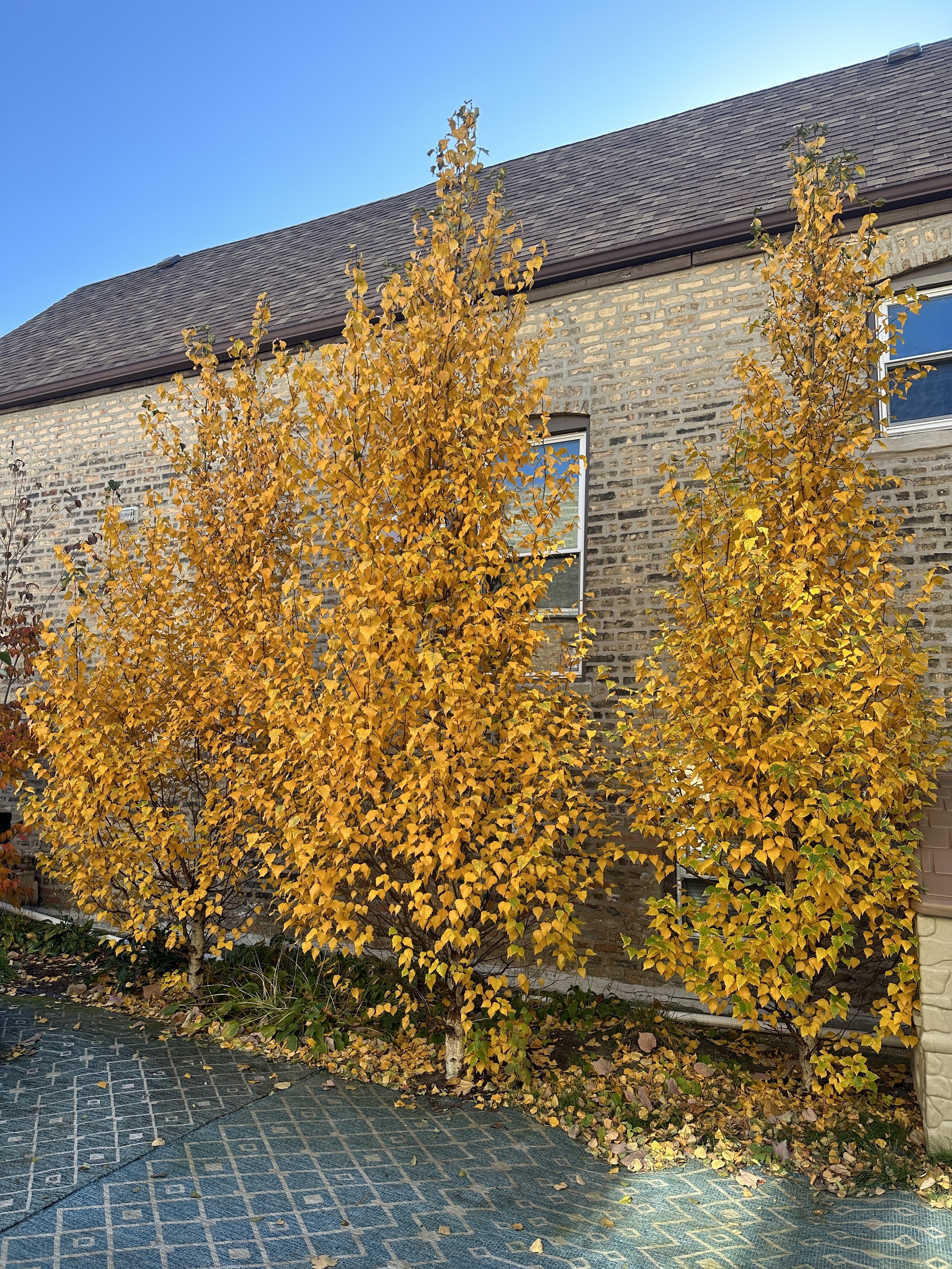
Birches offer remarkable flexibility in the landscape. They can stand alone as sculptural focal points or be planted in multi-stemmed groupings that read like small, informal groves. Narrow-form varieties are especially effective for creating subtle sound and privacy buffers without feeling dense or enclosing. In autumn, their foliage shifts to a clear, luminous yellow, bringing warmth and contrast to the garden. As the landscape quiets in winter, birch truly shines—its peeling bark emerging as a defining feature that adds texture and visual interest long after leaves have fallen.
Birch Poles for Winter Containers & Decor
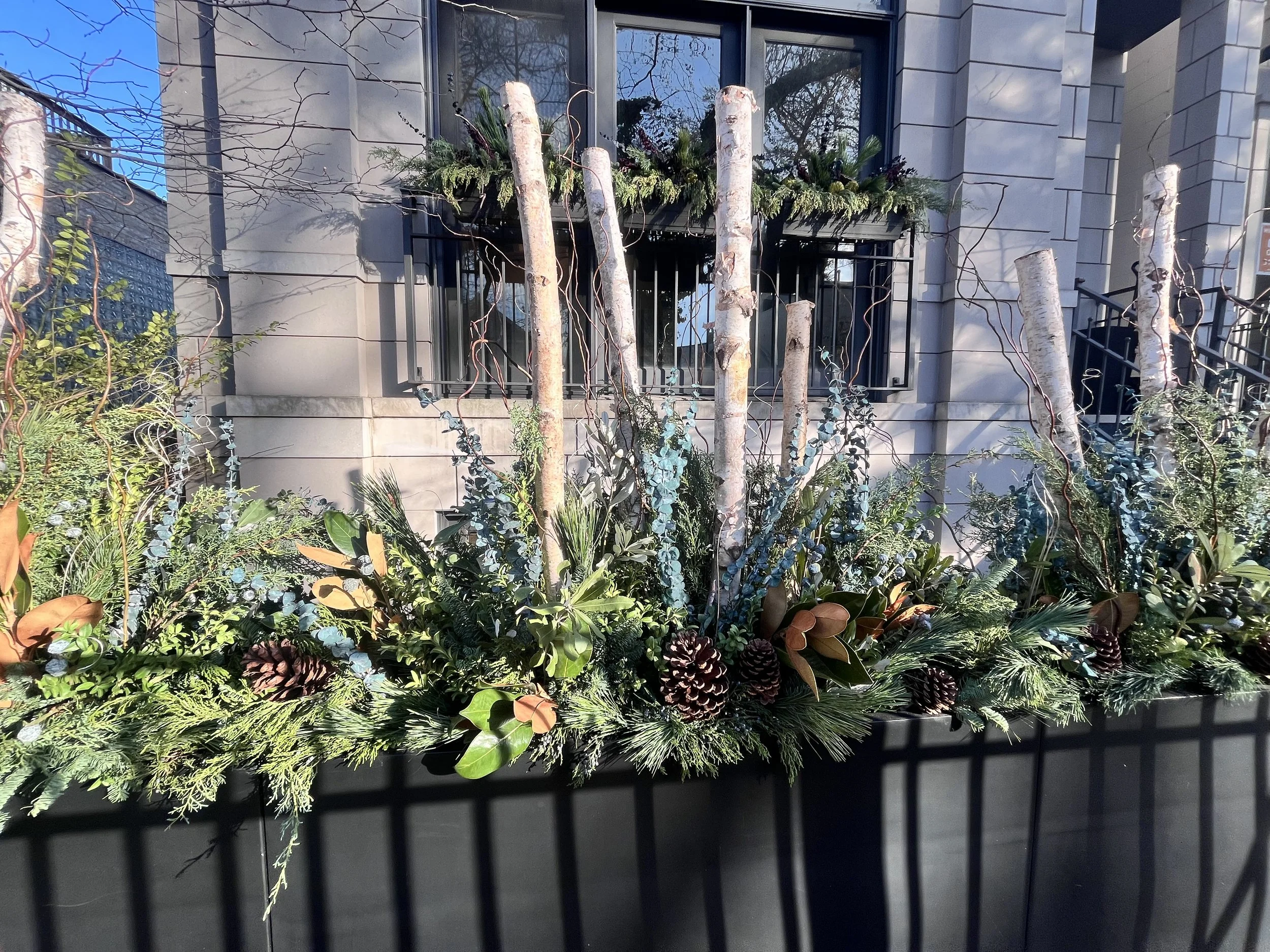
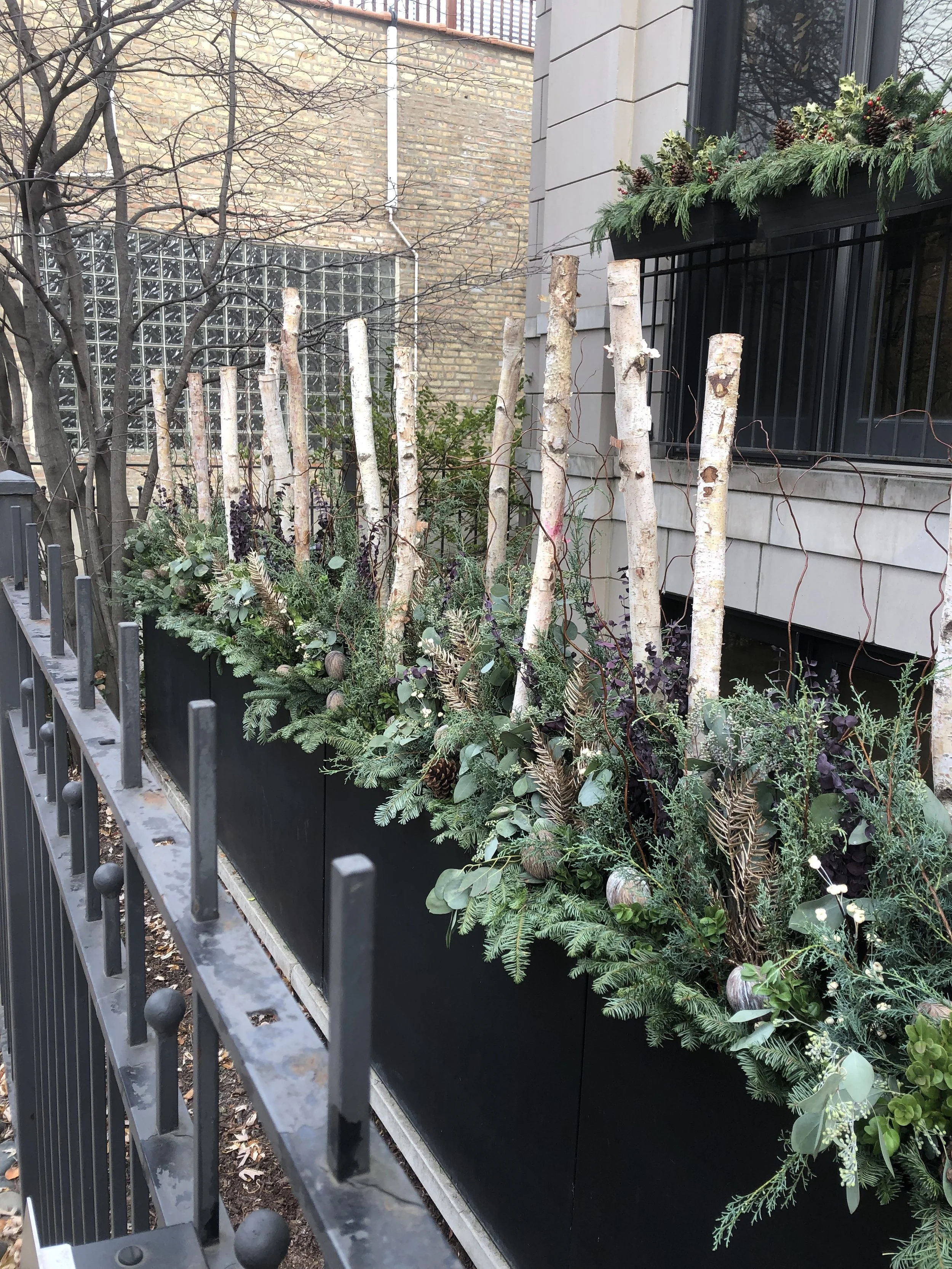
Birch has long been a favorite material for seasonal décor, especially in winter and holiday containers. Cut birch poles are widely used to add height, structure, and visual interest when gardens are resting and greenery is scarce. We love the way each birch pole brings its own character with subtle variations in bark color, markings, and texture create a natural, layered look that feels intentional but never overly styled. Paired with evergreens, berries, lights, or simple red dogwood stems, birch adds contrast and warmth to container designs while enhancing curb appeal throughout the coldest months. It’s a timeless, nature-forward element that celebrates the quiet beauty of winter rather than trying to compete with it.

In Summary
Birches are versatile, resilient, and full of character—whether brightening a rooftop container, providing seasonal color in the garden, or creating natural privacy screens. Their airy canopies, striking bark, and golden fall leaves bring beauty and ecological value to any landscape.
A quick note for tree lovers: please admire birch bark without peeling it off. While it’s tempting, removing the bark can harm the tree. Enjoy its unique texture and color in place, and let these elegant trees continue to thrive for years to come.