
The Roof Rights Reality: A Rooftop Deck May Be Possible, But Not Guaranteed
What “Roof Rights” Really Mean in Chicago
At Rooftopia, we believe in educating our community & clients, so they can make informed decisions about potential investments, buying a new home or planning a major renovation. Here’s what you need to know about roof rights.
Many prospective homeowners, especially condo buyers, are excited by listings that mention “roof rights.” Unfortunately, this term can be misleading or misunderstood. Buyers sometimes assume that roof rights guarantee the ability to build a rooftop deck, pergola, or outdoor living space. In reality, “roof rights” are much more limited, and several important steps must happen before anyone can confirm whether a rooftop deck or structure is feasible on an empty roof.
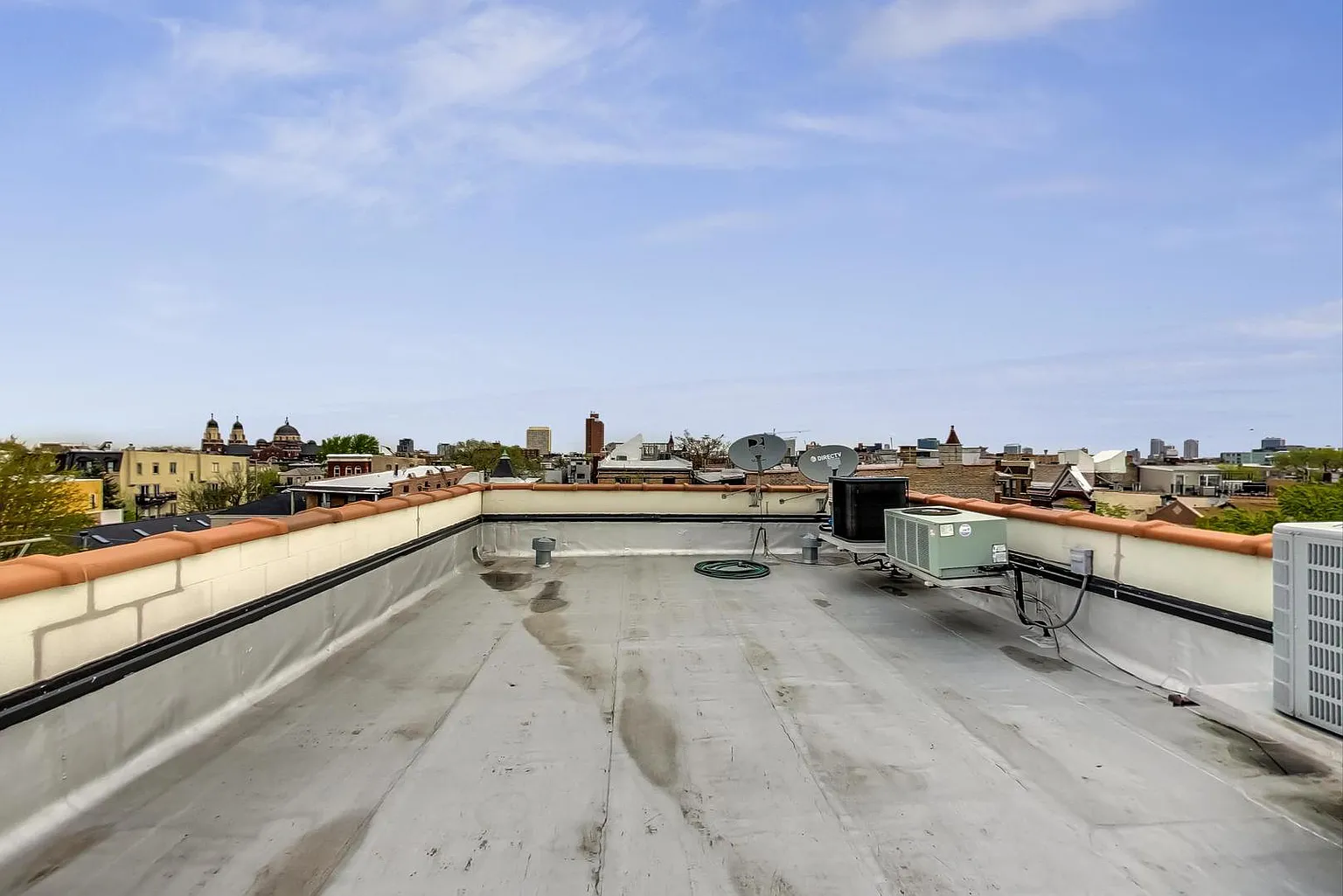

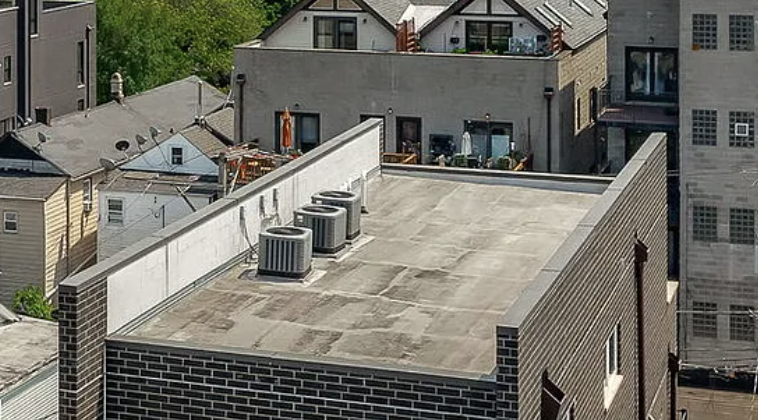
1. “Roof Rights”: Potential Red Flags for Your Future Roof Deck Build-Out
While the phrase “roof rights” appears frequently in real estate listings, it is not an official legal designation under Chicago law. In many cases, it functions more as a marketing term than a guarantee of what can actually be built. If a listing claims roof rights but the following conditions exist, you may be taking on more complexity, and higher costs than you expect:
The roof has never had a deck and is currently an empty, unfinished surface
Access is limited to a roof hatch, or there is no code-compliant stair access
There is a small or partial deck with no railings, suggesting a DIY installation that may be unsafe or not code compliant
In short, “roof rights” does not automatically mean a rooftop deck can be legally or easily built. While the rooftop space of your dreams may still be possible, it can require significant investment—especially if proper access, permits, or structural upgrades are needed after purchase. Understanding these red flags early can help you plan realistically and avoid costly surprises.
2. Why buyers and homeowners are often confused
There is a good reason many clients are surprised to discover the limitations of roof rights:
Real estate listings frequently use the phrase without clarification
Condo documents may grant “access” or “exclusive use” but not “building rights”
The term sounds more powerful than it is
Most roofs are not originally engineered with necessary structural capacity to support a new rooftop deck
People often want pricing before they own the property, but the necessary information isn’t accessible before closing
The result is a mismatch between expectation and feasibility.
3. What “roof rights” mean for condo owners
In nearly all condominium buildings, the roof is considered common property. Even if a particular unit is granted roof rights in the form of “exclusive use,” this typically means access—not the right to construct a deck, pergola, privacy screens, or any structural element.
To build anything on a condo roof, you would need:
Condo association approval
Review of the condominium declaration and bylaws
A formal architectural review
City permits
Structural engineering verification that the roof can hold the required loads
It’s important to understand that exclusive-use agreements alone Do not give a unit owner the right to build a roof deck. At most, they grant permission to use a portion of the roof, often for passive activities or placing movable furniture or planters—not for adding permanent structures.
4. For single-family or multi-family building owners
If the building is fully owned by one person or family, the idea of “roof rights” simply becomes part of property ownership. However, this still does not mean you can automatically build everything you envision.
Even for single-owner buildings, rooftop construction requires compliance with:
Chicago Building Code
Zoning requirements
Structural capacity (verified by a licensed structural engineer)
Permitting through the City of Chicago
Many existing roofs were never engineered to support the additional weight of decks, pergolas, pavers, planters, soil, or outdoor furniture. Before any design or pricing can begin, the structure must be evaluated by a licensed professional to confirm whether it meets current code requirements, or if reinforcement will be necessary. In addition, proper egress and safe access must be planned. For older buildings, constructing a compliant stairwell and upgrading the roof structure to handle new loads can require a significant investment of both time and resources.
5. Why we cannot provide estimates before due diligence is completed
One of the most common questions we receive at Rooftopia is:
“I’m thinking of buying a condo with roof rights - how much will a rooftop deck cost?”
The honest answer: We can’t determine that until several formal steps are completed, and most of those steps require property access and documentation that buyers won’t have until after closing.
Here’s are some of the discovery steps we must take before accurate pricing for construction is possible:
Obtain or order a Plat of Survey (land survey)
Schedule A site visit to evaluate access, layout, existing conditions, and potential limitations
A FOIA request to retrieve original building plans (if available)
Architectural Building & zoning and code review
Structural engineering analysis to determine load capacity (requires either a roof opening or an opening in drywall & specialists to patch and repair each opening)
Review of condo bylaws or building restrictions
Preliminary design concepts shaped by code requirements
Every rooftop project is highly individualized. Until these steps are completed, pricing is little more than guesswork and guessing is the fastest way to create problems, confusion, and unexpected costs later.
6. The Roof Rights Reality: A Rooftop Deck May Be Possible, But Not Guaranteed
Roof rights do not automatically mean:
A deck can be built
A pergola is allowed
The roof can support the required weight
The condo association will approve the work
The project will obtain a city permit during zoning or building review
Costs can be determined early in the buying process
A feasible project requires collaboration between the designer, architect, structural engineer, and the City of Chicago, often over many months or even a year to fully plan and permit a new rooftop deck.
7. What Homeowners Can Expect — and How Rooftopia Helps
Once a client officially owns their home, Rooftopia guides them through a comprehensive, step-by-step process designed to eliminate guesswork and ensure every decision is informed, safe, and code compliant. Our process typically includes:
A discovery phase to obtain and review the Plat of Survey and existing building plans
A complete architectural, zoning, and building code review
Structural engineering evaluation to confirm load capacity and feasibility
Detailed site measurements and existing-condition documentation
Concept design development, 3D renderings, and clear, detailed cost estimates throughout the process
Material selection with sustainability, durability, and performance in mind
Preparation and coordination of all required permit documentation
Final construction planning with a cohesive, realistic budget
Thoughtful installation and construction, supported by clear communication at every stage
Ongoing support, including fine gardening and long-term care tailored to your space and evolving needs
Our goal is full transparency, safety, and responsible design. Rooftop projects require careful engineering, thoughtful planning, and precise execution—we never want clients moving forward based on assumptions or incomplete information.
While roof rights can offer exciting potential for an exceptional outdoor space, they are not a guarantee. Our role is to identify limitations early, prevent misunderstandings, and set realistic expectations around feasibility, timelines, and investment.
At Rooftopia, we take the time to thoroughly evaluate every project because your home’s safety and long-term integrity matter. A rooftop deck is a significant investment, and when designed and built responsibly, it becomes a beautiful, functional, and sustainable extension of your home: one you can enjoy with confidence for years to come.