
April Native Plant of the Month: Eastern Redbud (Cercis canadensis)
The Eastern Redbud: A Spring Showstopper for Chicago Landscapes
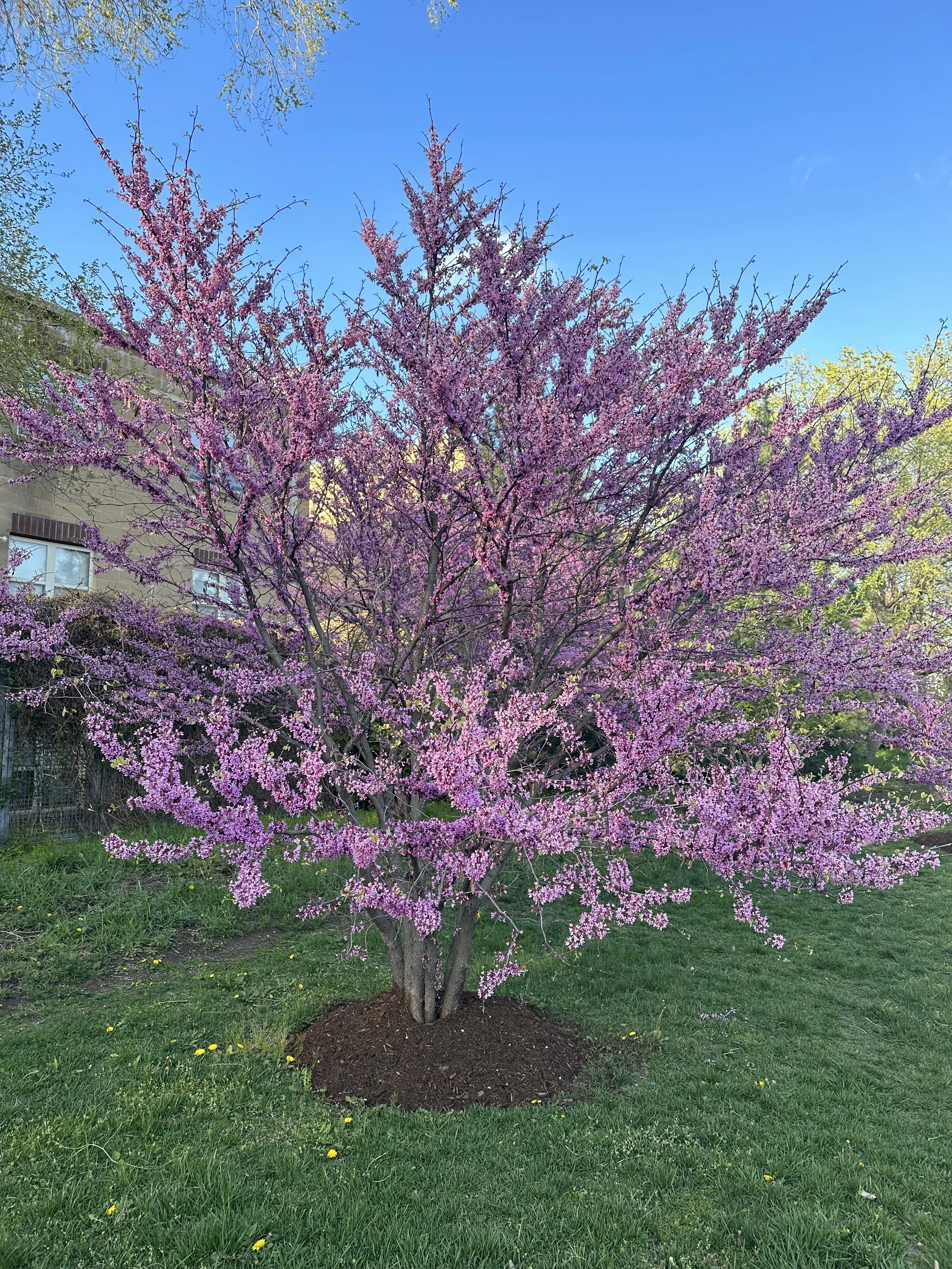
Each April in the Chicago area, spring rains and warmer temperatures take over and winter loosens its grip. The landscape transforms almost overnight as we have seen this week. Bare branches give way to soft clouds of pinks, purples, whites, greens and yellows an unmistakable sign that the growing season has arrived. Among the most beloved of these native trees is the Eastern Redbud (Cercis canadensis).
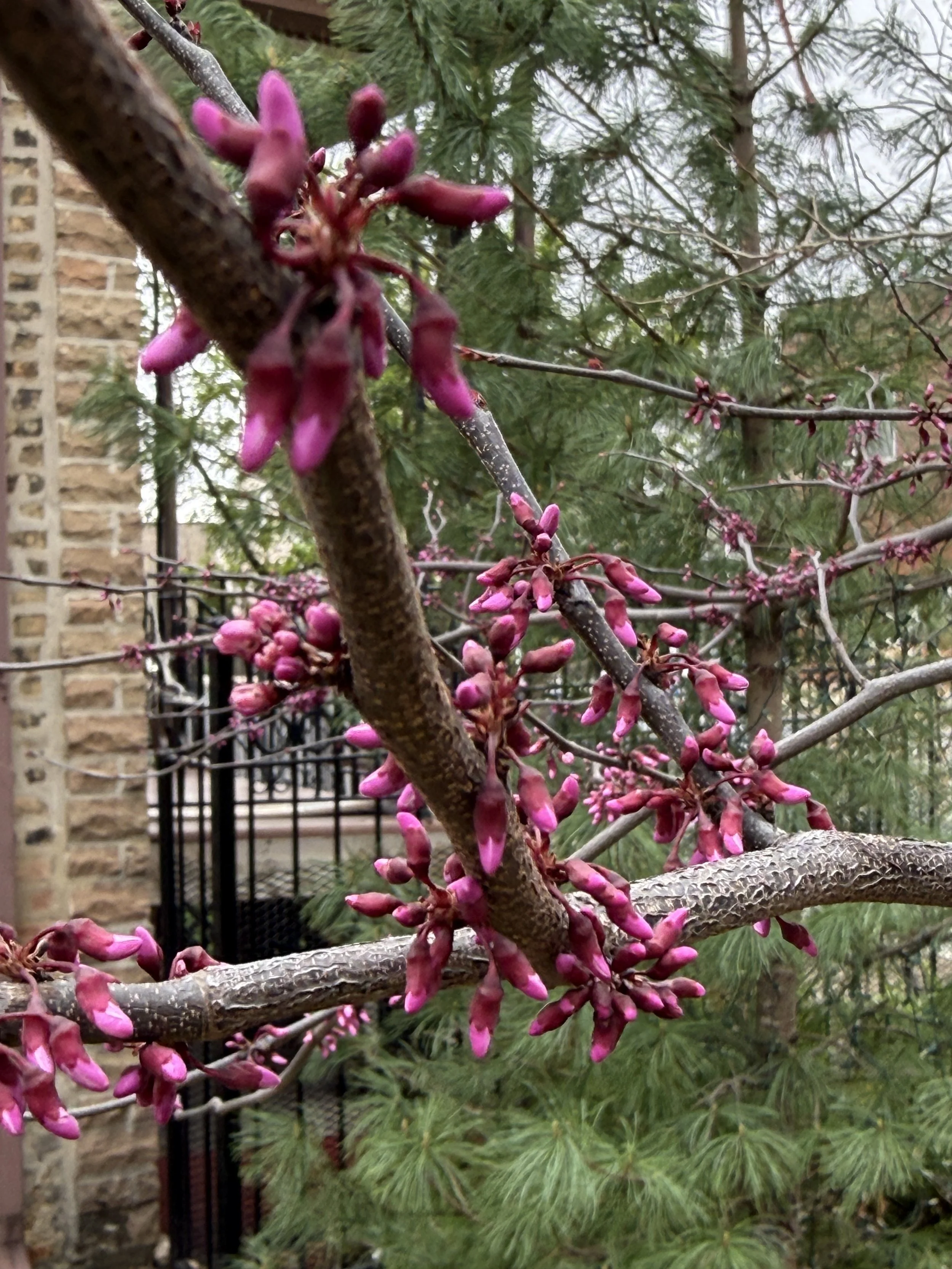
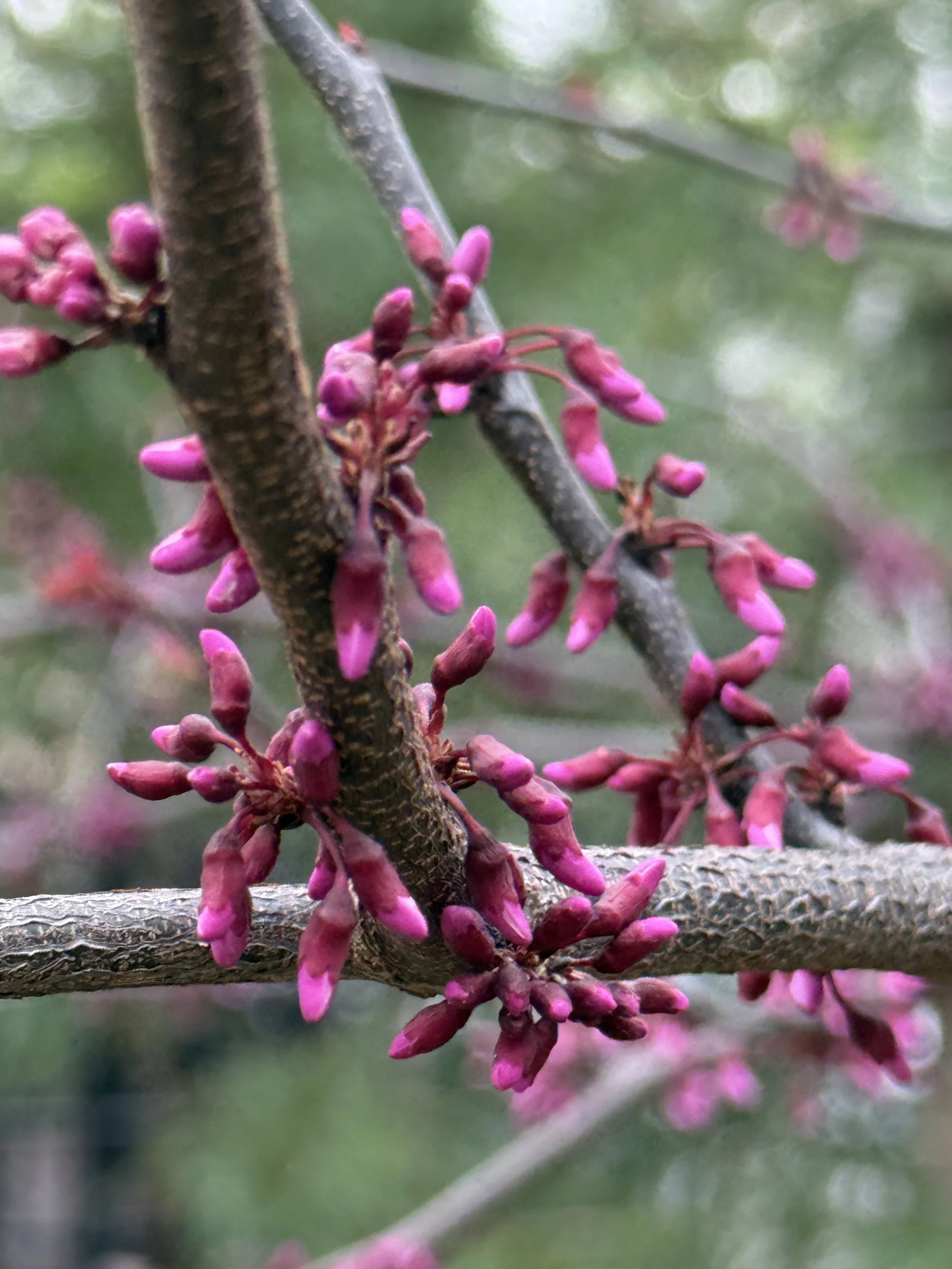
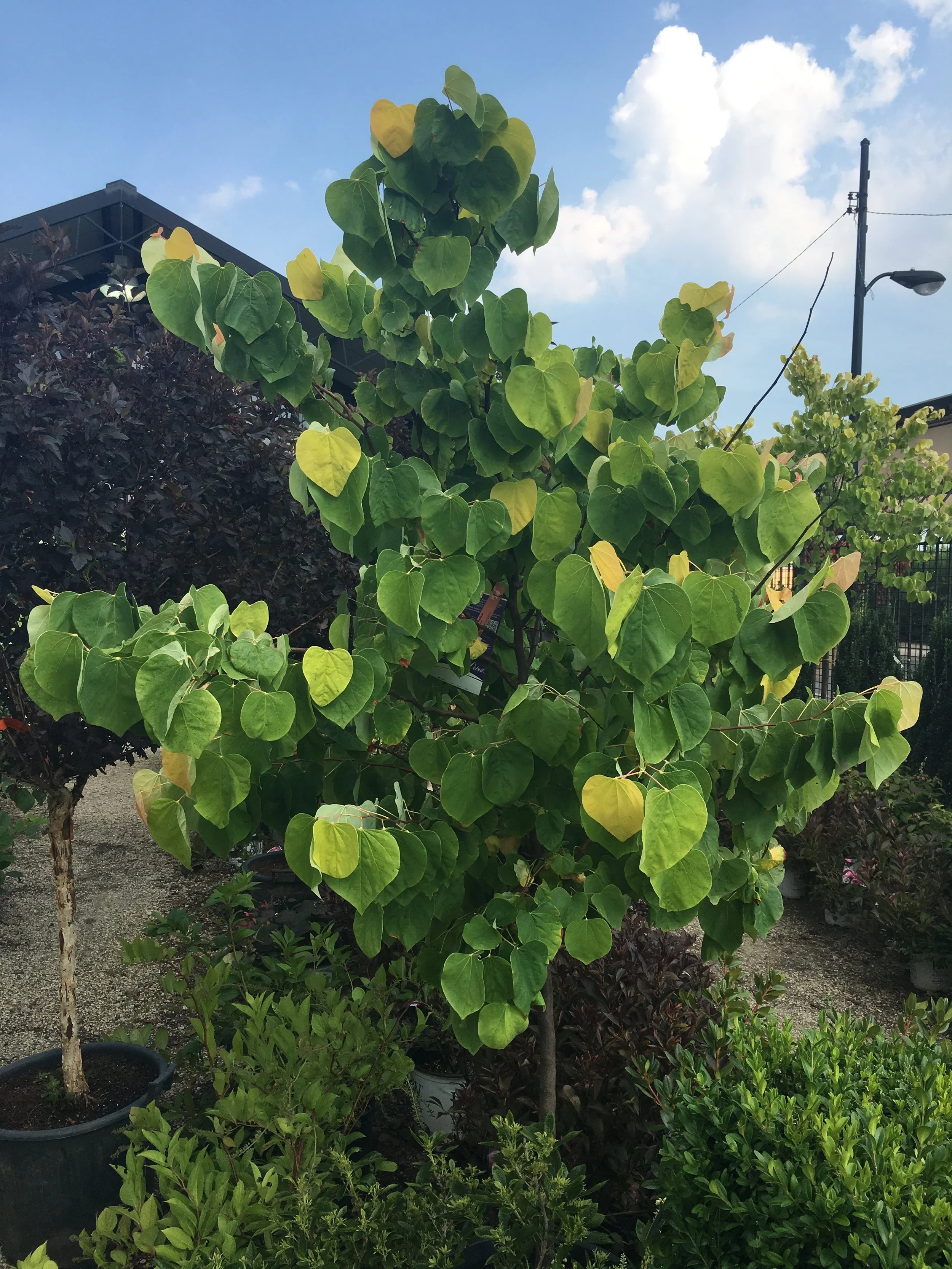
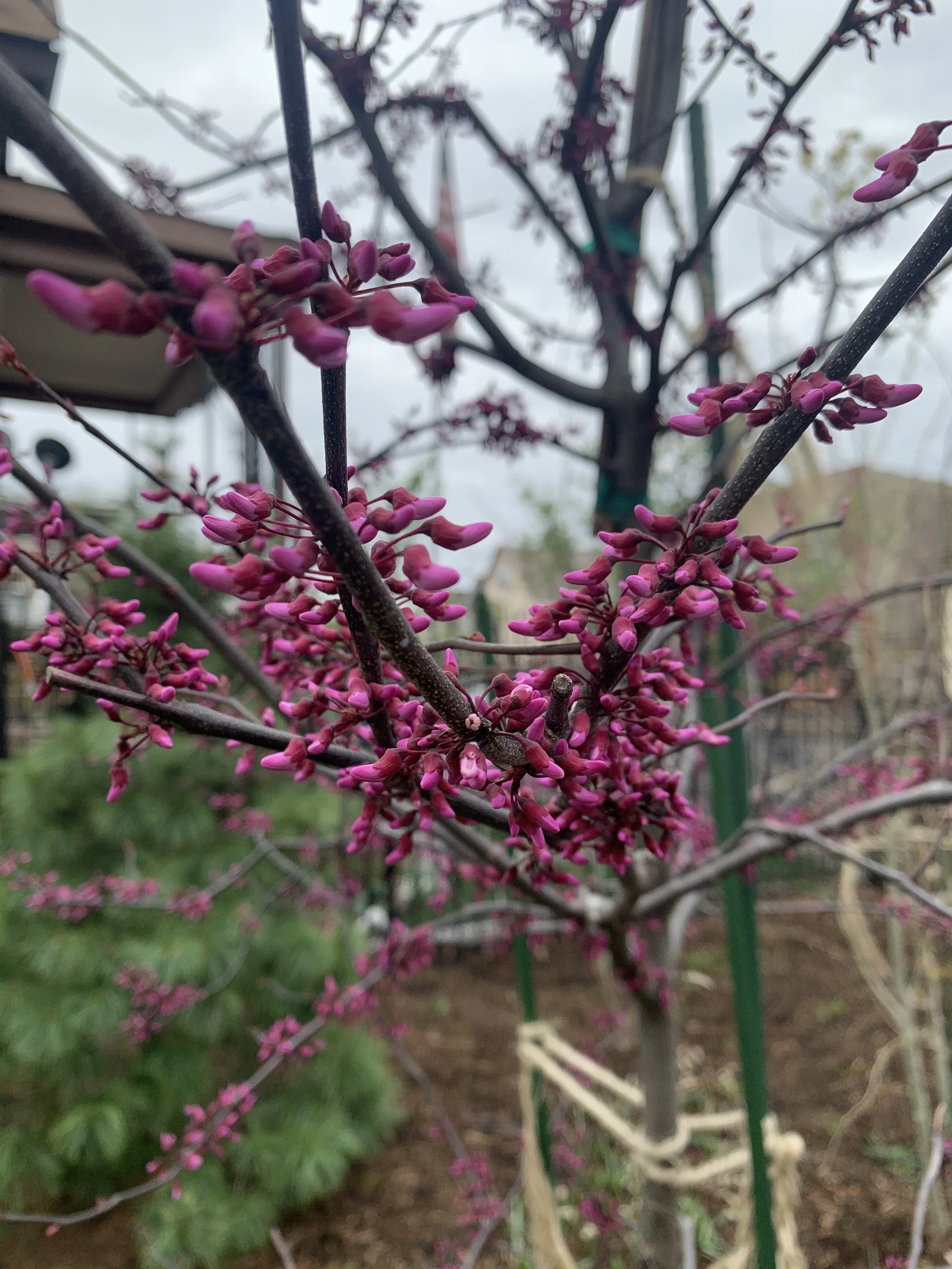
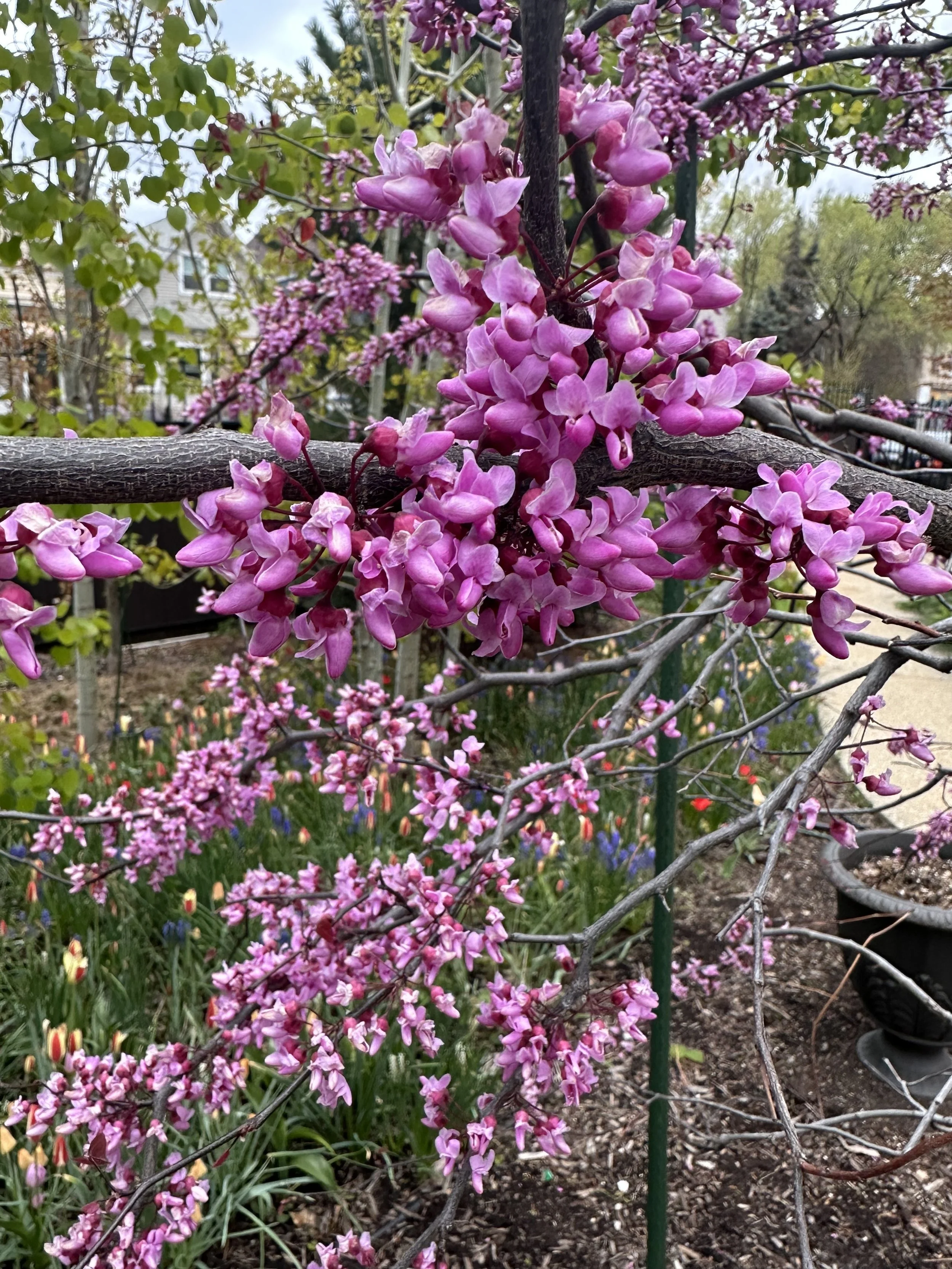
Celebrated for both its beauty and ecological value, the redbud is especially well-suited to urban environments where space is limited. One of its most unique characteristics of the redbud is its flowering habit. Cercis canadensis species form clusters of blooms directly from the branches and trunk, a trait known as cauliflory. The Eastern Redbud flowers emerge in mid-April before its leaves form. The small, pea-like pink or white blossoms grow directly along the branches and trunk, creating a dramatic and eye-catching display. This striking display creates a sculptural, almost ethereal effect, making the redbud a standout feature in any spring landscape. Its large, heart-shaped leaves emerge in shades of green or deep purple, often showing subtle color variation as they mature, before transitioning to a warm, luminous yellow in fall.
Redbuds are Great for Urban Landscapes
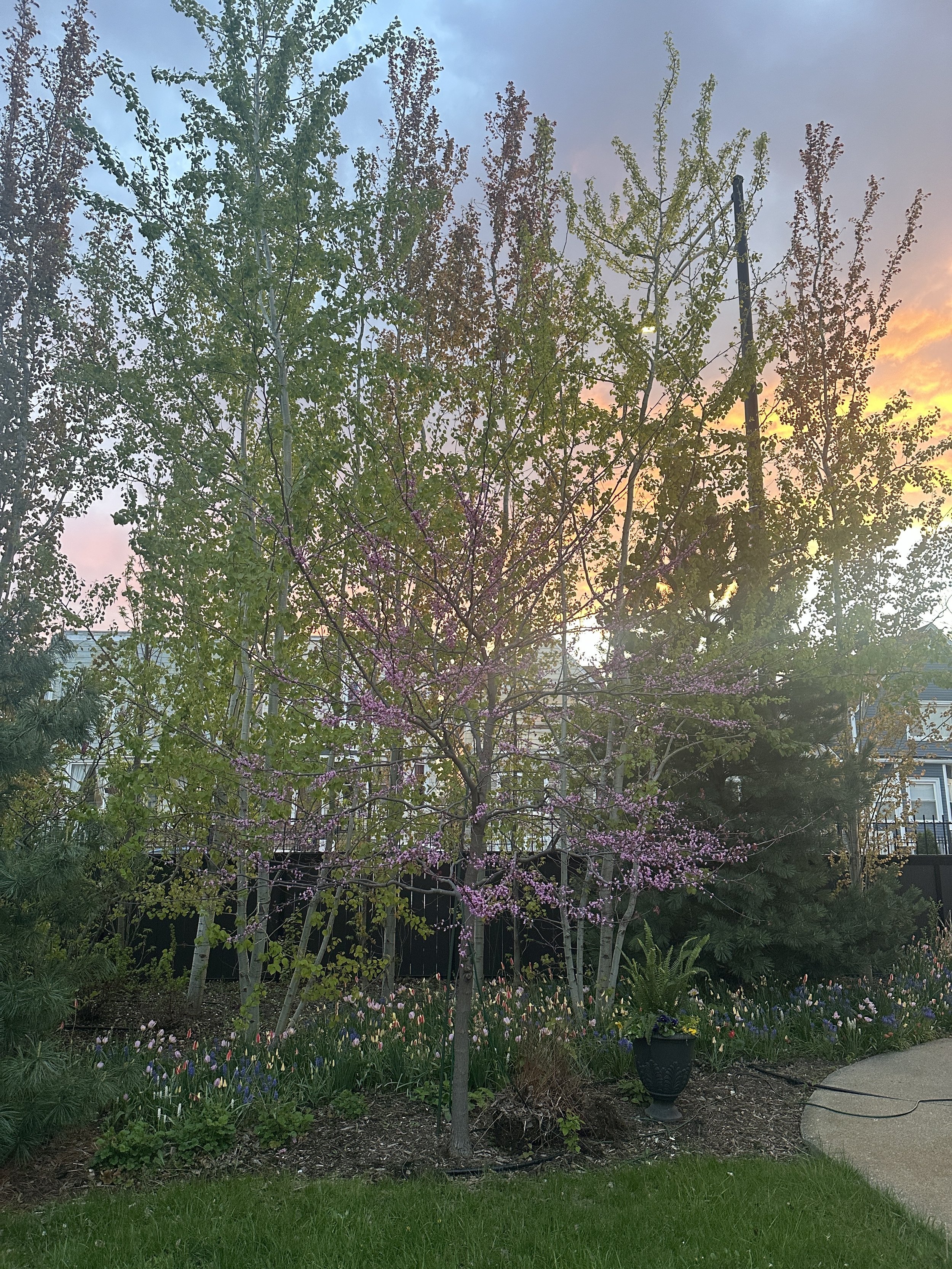
Despite their delicate appearance, Eastern Redbuds are well-suited for many residential landscapes throughout Chicago—especially where space is limited and conditions are thoughtfully considered.
Why we love them:
Compact size: Typically growing 20–30 feet tall, they are an excellent fit for smaller yards and urban spaces
Multi-season interest: Spring flowers, heart-shaped summer foliage, and warm fall color
Adaptable soils: Tolerant of a range of soil types and pH conditions
Ideal as understory trees: Thrive when given some protection from intense afternoon sun
While adaptable, Redbuds do require careful siting. They do not tolerate transplanting well, so placement from the start is important. As an understory tree, they prefer some shelter, particularly from harsh western sun exposure and high wind conditions. We do not recommend this tree for rooftop containers as the wind and sun exposure are too intense for our beloved redbuds.
With the right placement, their graceful branching structure and seasonal beauty make them a standout addition to a thoughtfully designed landscape. A Win for Pollinators
Beyond aesthetics, Eastern Redbuds play an important ecological role. Their early blooms provide critical nectar for pollinators, especially native bees emerging after winter when food sources are limited.
Incorporating native species like Redbud helps support biodiversity and strengthens the health of urban ecosystems—something we prioritize in every project we design.
Growing Conditions & Care
Eastern Redbuds are relatively low-maintenance when planted in the right conditions:
Light: Preference for sites with Eastern exposure, prefers partial shade in the afternoon
Soil: Well-drained soil is key
Water: Moderate watering, especially during establishment
Placement: Protected areas can help shield from harsh winter winds
While they are hardy, thoughtful placement and proper planting go a long way in ensuring long-term success.
Why Choose Native Trees?
Choosing native plants like the Eastern Redbud means investing in a landscape that is not only beautiful, but also resilient and environmentally responsible.
Native species are adapted to local conditions, require fewer inputs over time, and provide essential support to local wildlife. In early spring, Redbud flowers are an important nectar and pollen source for emerging pollinators such as native bees, including mason bees and bumblebees, as well as early-season butterflies. Because they bloom before many other plants leaf out, they offer a critical food source at a time when little else is available.
Beyond pollinators, Redbuds contribute to the broader ecosystem. Their branching structure can provide shelter for small birds, while seeds may be consumed by species like chickadees and cardinals. The tree also supports various moth and butterfly larvae, adding another layer of ecological value.
By incorporating native trees like Redbud into the landscape, we help restore ecological relationships, creating spaces that not only look beautiful, but actively support the health and biodiversity of our local environment.
Bringing It All Together
The Eastern Redbud is more than just a pretty tree, it’s a signal of spring, a resource for pollinators, and a versatile design element that elevates any outdoor space.
If you’re looking to add color, structure, and ecological value to your small landscape in Chicago, this native tree is a great choice.
At Rooftopia, we believe the best landscapes are rooted in thoughtful design, and that starts with choosing the right plants for the right place. 🌿