
Native Plant of the Month: Joe-Pye Weed - A Late-Summer Native That Loves Moisture
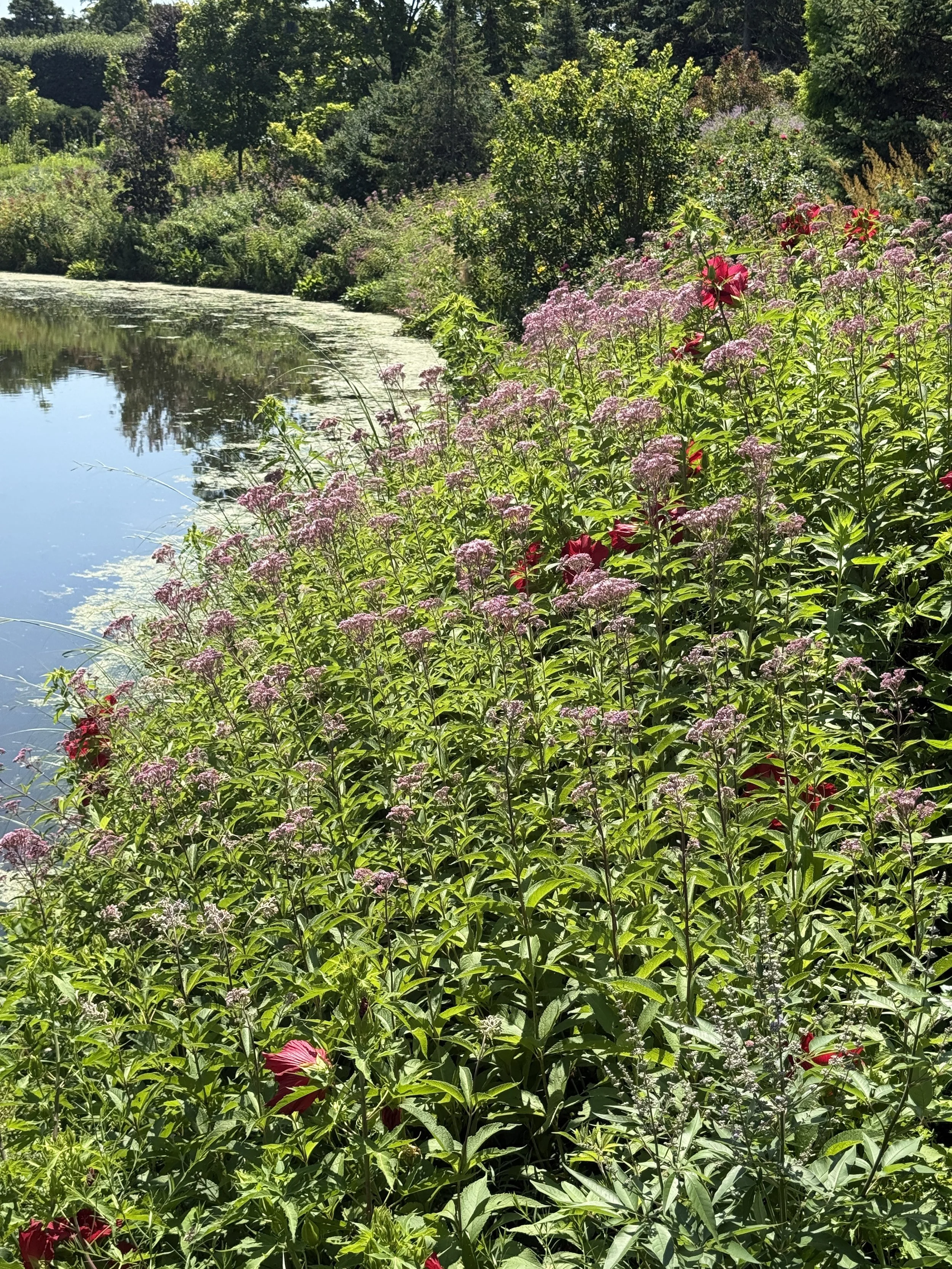
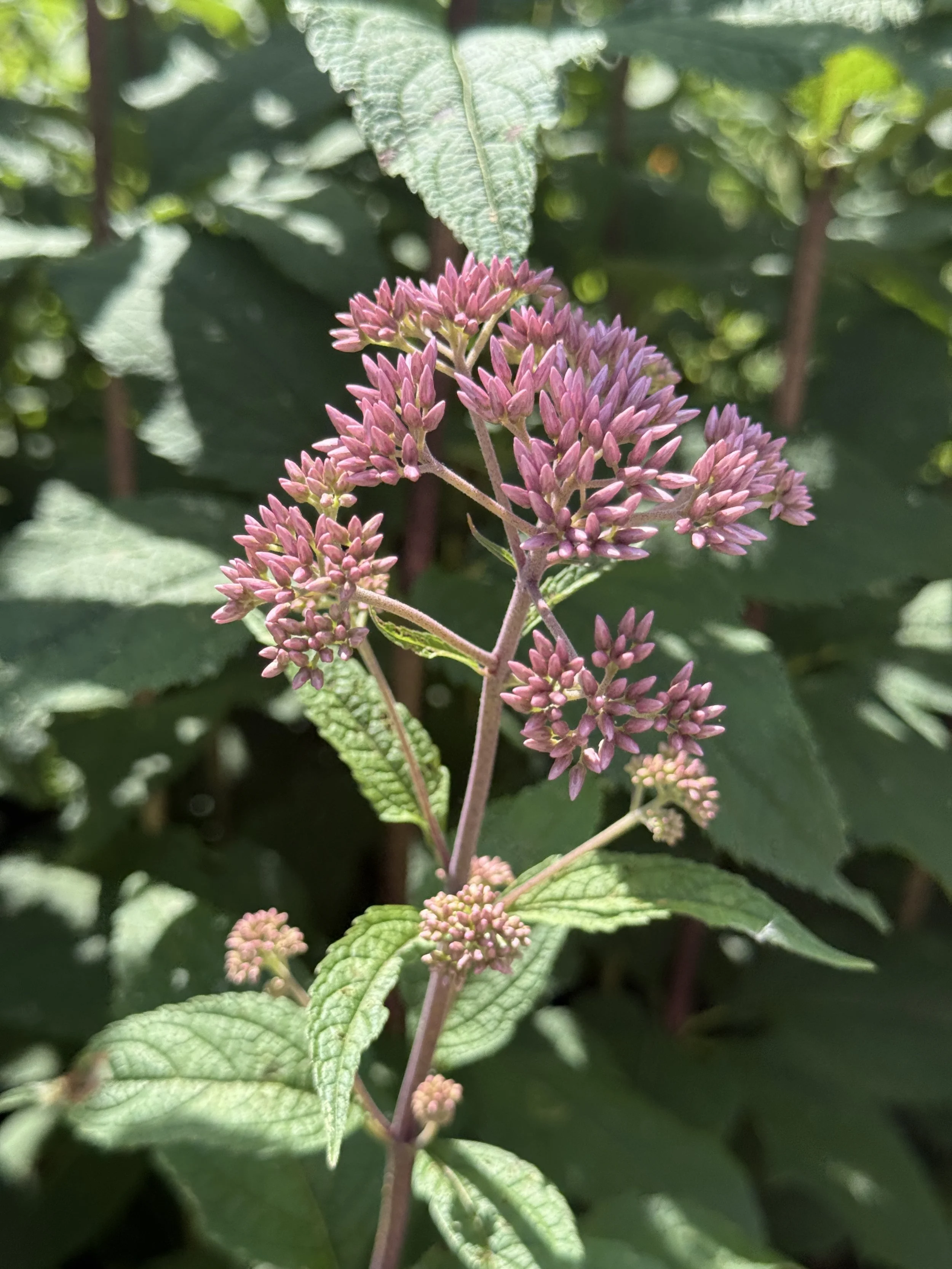
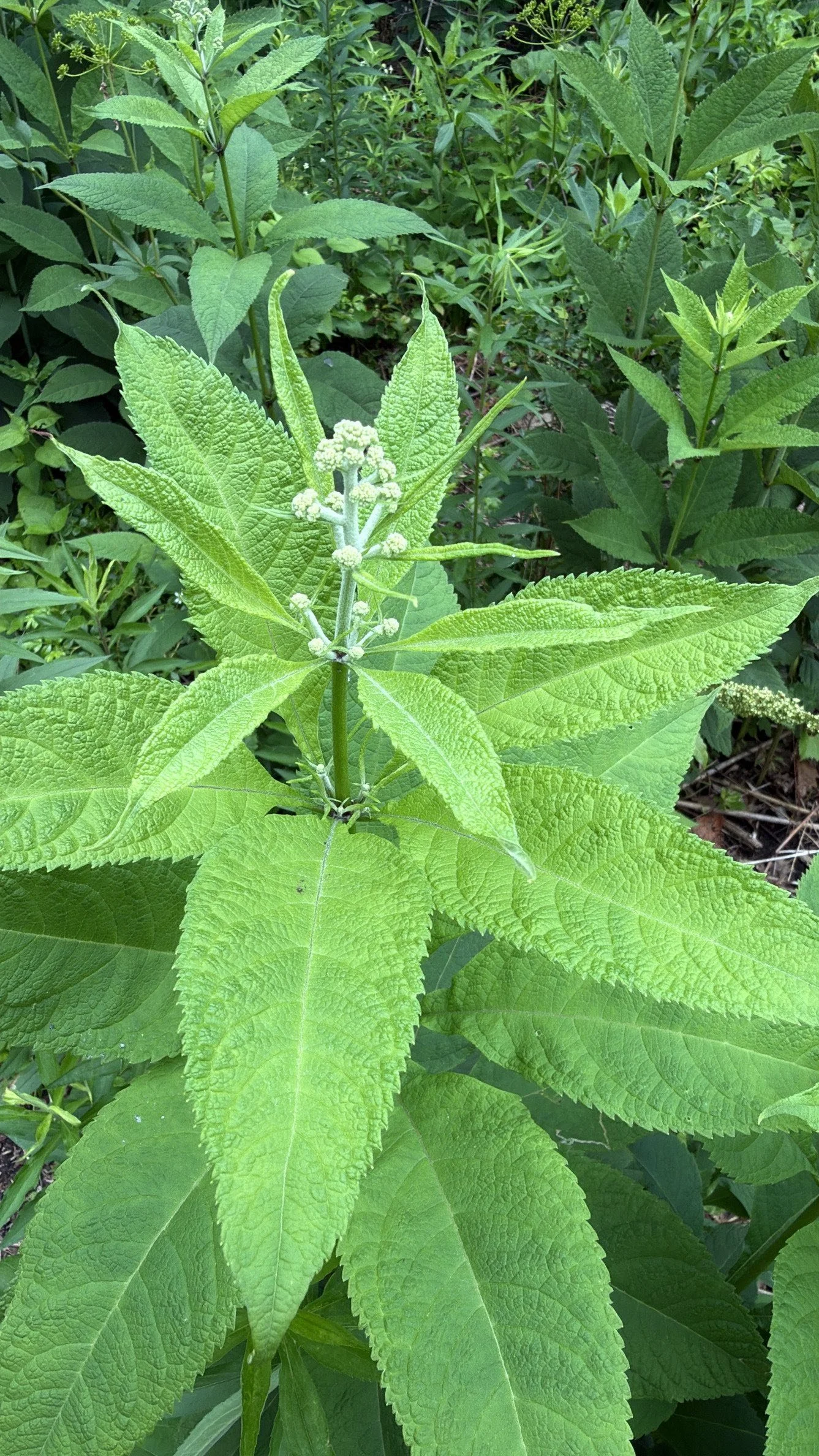
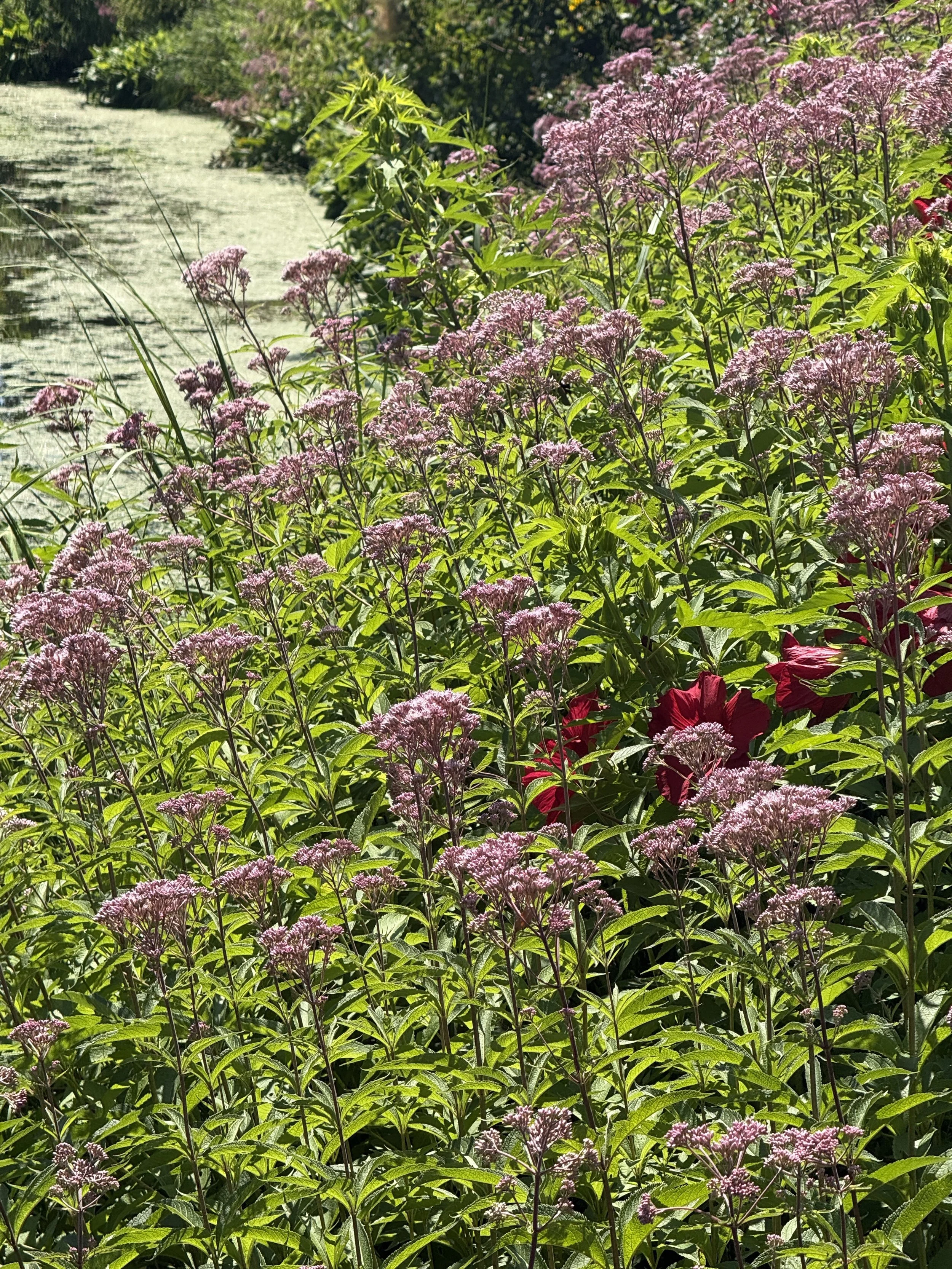
Each month, we highlight a native perennial that we love and share a little more about what makes it special. For August, we selected Joe-Pye weed (Eutrochium purpureum (formerly Eupatorium purpureum), and our appreciation for this impressive native grew even more after a recent summer road trip to the Smoky Mountains. Traveling through Tennessee in early August, we were delighted to see towering Joe-Pye weed blooming along roadsides, meadows, streams, and wet areas everywhere we went. Its clouds of pinkish-purple flowers were impossible to miss, creating a beautiful display from late June through August. Native Joe-Pye weed brings dramatic height, structure, and late-summer color to the landscape while providing an important source of nectar for bees, butterflies, moths, and other beneficial insects.
And despite its common name, Joe-Pye weed isn't really a weed at all.
A Native with Serious Presence
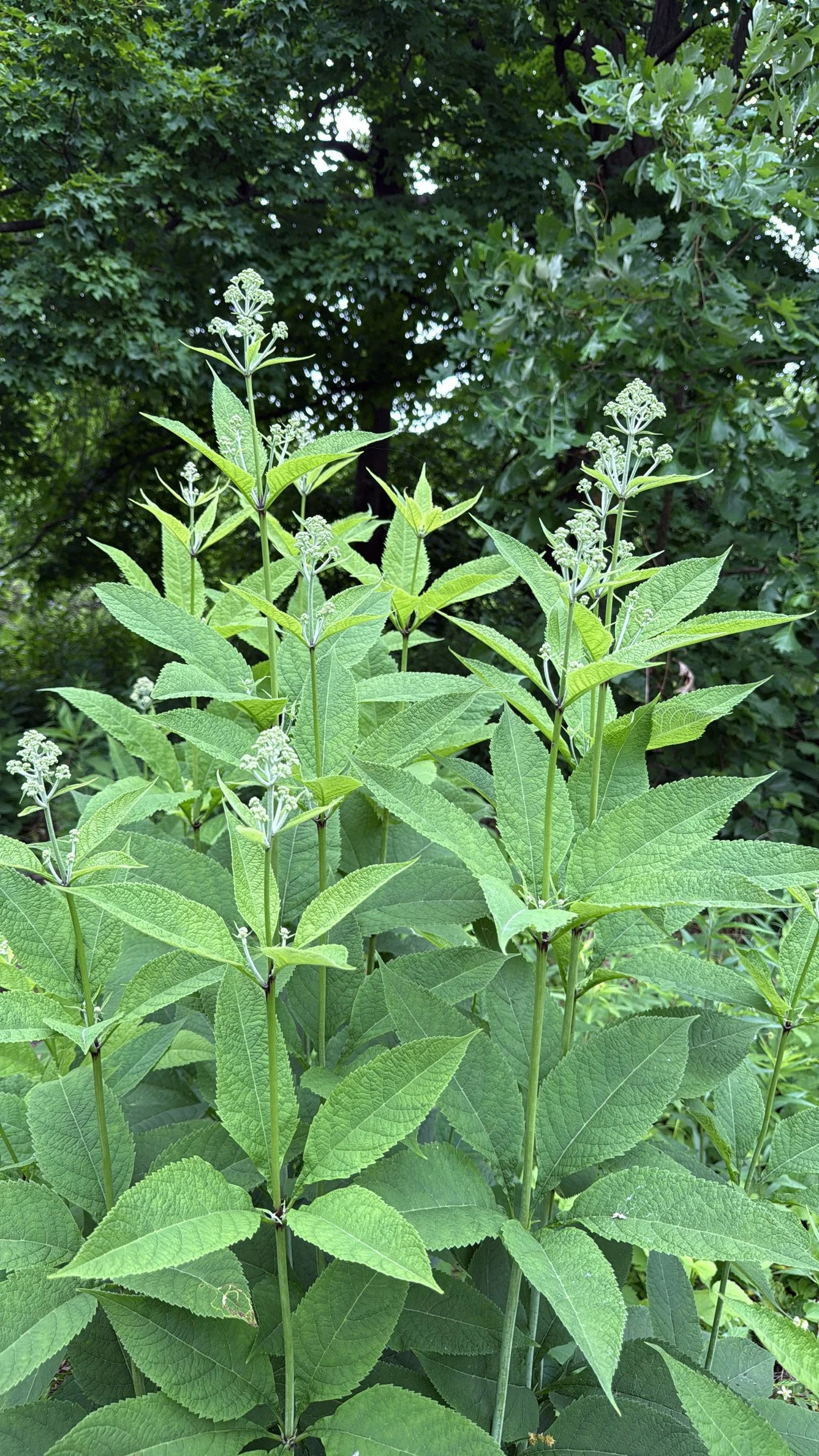
Joe-Pye weed refers to several species in the genus Eutrochium, including Eutrochium purpureum, sweet Joe-Pye weed; Eutrochium maculatum, spotted Joe-Pye weed; and Eutrochium fistulosum, hollow Joe-Pye weed.
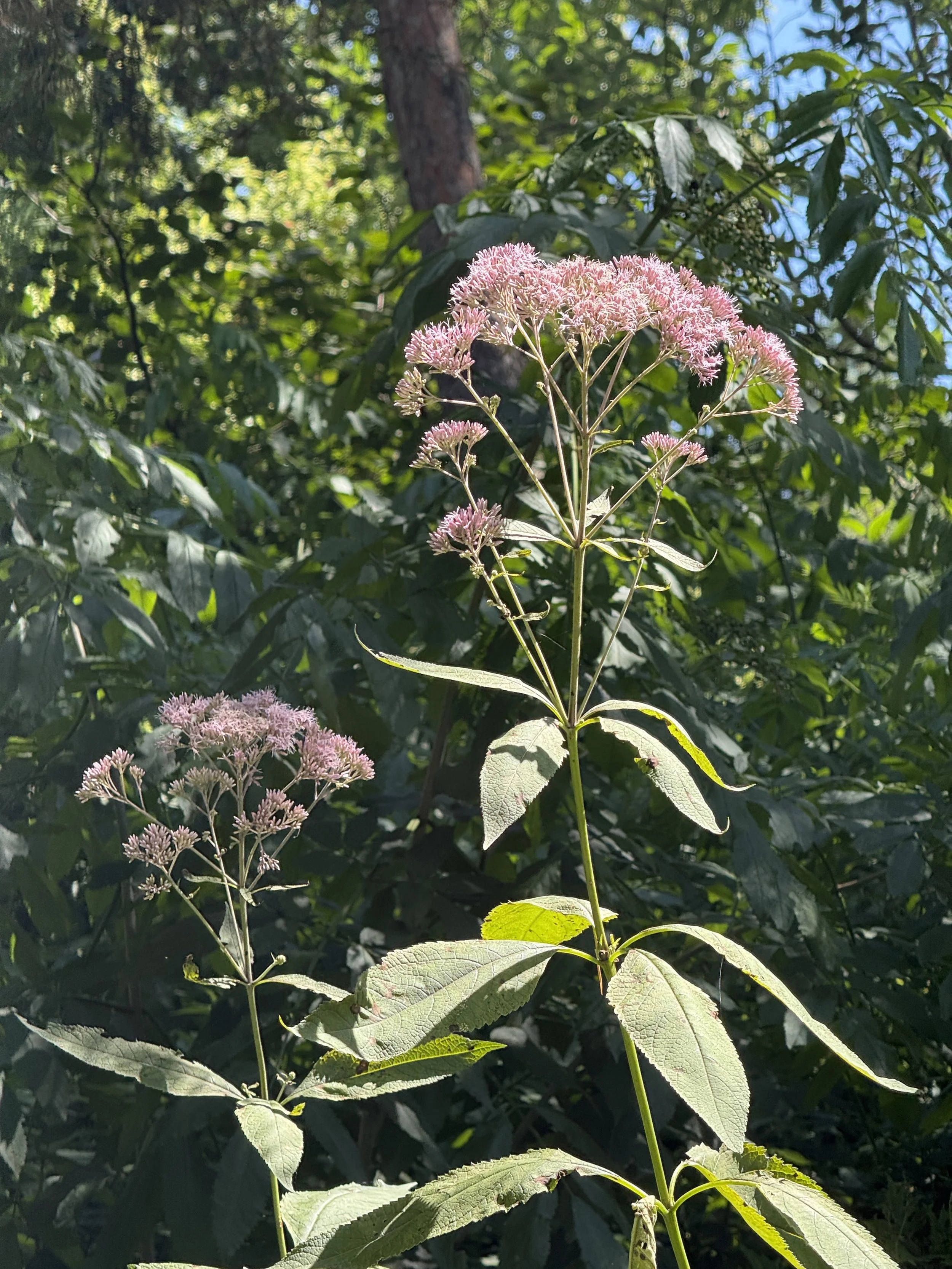
These are substantial plants. Depending on the species and cultivar, they can reach approximately 4–7 feet tall, making them excellent choices for the back of a perennial border, naturalized planting, rain garden, or larger landscape where their height can be appreciated.
Their large, rounded clusters of dusty pink, mauve, or purple flowers typically appear from mid-summer into early fall, providing valuable color at a time when many spring and early-summer perennials have finished blooming.
Some species also have fragrant flowers or foliage. Eutrochium purpureum, commonly called sweet Joe-Pye weed, is particularly notable for its subtle vanilla-like fragrance.
Joe-Pye Weed and Pollinators
Joe-Pye weed is especially valuable because it blooms when many other plants are beginning to wind down for the season.
Its large flower clusters are rich in nectar and attract a wide range of insects, including bees, butterflies, skippers, moths, and bee flies.
For a residential landscape, that means one thoughtfully placed grouping can provide both visual impact and meaningful ecological value without making the garden feel overly informal.
We especially like combining Joe-Pye weed with other plants that offer different heights, textures, and bloom periods so the garden feels intentional throughout the growing season.
The Most Important Growing Requirement: Moisture
If you only take away one key feature about Joe Pye weed other than it’s height, remember that it loves and depends on water.
While it can tolerate some variation depending on the species, most Joe-Pye weeds perform best in consistently moist to medium-moist soil. They are particularly well suited to rain gardens, low areas, stream edges, moist meadows, and planting beds that naturally retain moisture.
In a typical residential landscape, Joe-Pye weed is happiest in:
Full sun to part shade
Consistently moist, well-prepared soil
Rich soils with good organic matter
Rain gardens and drainage areas
Moist perennial borders
Areas near ponds, streams, or downspouts
It is not a great choice for a dry planting bed that receives little supplemental water. During hot, dry weather, plants can become stressed if the soil repeatedly dries out.
This is an important distinction when selecting plants for a sustainable landscape: choosing a native plant doesn't automatically mean choosing a drought-tolerant plant. The best plant is one that matches the actual conditions of the site.
Native from Chicago to the Smoky Mountains
Joe-Pye weed has a broad native range across much of eastern and central North America, including Illinois, Wisconsin, Missouri, Kentucky, Tennessee, and much of the eastern United States. Different species occur in a variety of moist habitats, including wet meadows, stream edges, woodland openings, and wetlands.
You don't have to travel to the Smoky Mountains to enjoy it. Joe-Pye weed can be found in native and naturalistic plantings around Chicago, including Chicago Botanic Garden, Jackson Park, and the Chicago Riverwalk's Wild Mile, the world's first floating eco-park behind REI where native plants are helping to restore natural habitat along the Chicago River.
Seeing Joe-Pye weed in both wild and designed settings is a great reminder of an important principle in landscape design: the right plant in the right place will always perform better.
Designing with Joe-Pye Weed
Because of its impressive size, Joe-Pye weed needs plenty of room to grow and is best suited to larger planting areas where moisture is readily available. It works especially well in rain gardens, naturalized borders, low-lying areas, and other landscapes with consistently moist soil.
When designing with Joe-Pye weed, consider pairing it with other plants that enjoy similar growing conditions while offering different heights, textures, and bloom times. This creates a layered planting that continues to evolve throughout the season.
Consider combining Joe-Pye weed with:
Early to midsummer:
Bee balm, swamp milkweed, blue flag iris, and Culver's root
Mid- to late summer:
Cardinal flower, obedient plant, black-eyed Susan, and native grasses
Late summer into fall:
New England aster, smooth blue aster, goldenrod, and swamp sunflower
The result is a lush, seasonally changing planting where Joe-Pye weed provides a dramatic late-summer focal point while complementary plants fill in around it and keep the garden interesting from early summer through fall.
Why We Love Joe-Pye Weed
Joe-Pye weed is a great example of a native plant that combines beauty with ecological value. Its substantial root system helps stabilize soil and absorb moisture, making it particularly well suited to rain gardens, moist planting areas, and naturalized landscapes.
For larger Chicago landscapes, it's a dramatic late-summer perennial that earns its space—not only for its height and flowers, but for the role it plays above and below the soil.
At Rooftopia, we believe the best landscapes are designed around plants that are well suited to their environment, creating spaces that perform beautifully while supporting a healthier urban ecosystem.